As Andy Burnham’s place-based agenda takes over Westminster, Deiniol Brown argues that Wales’ borderlands show the power and dangers of identity politics.
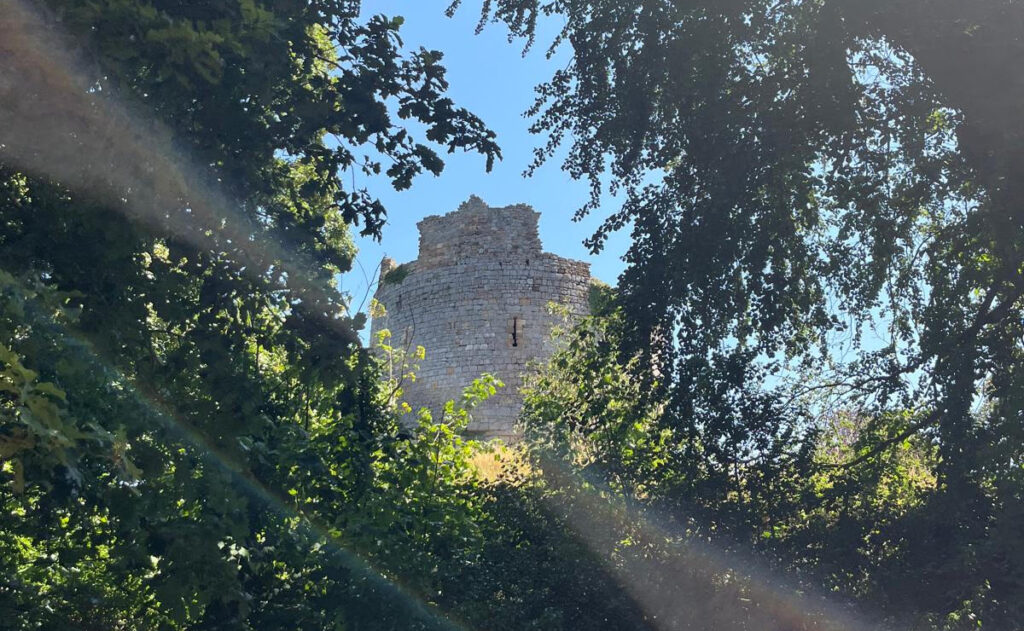
Recently, during a visit to my grandparents near Mold, in Flintshire, I decided to walk from Hawarden Castle to Ewloe, two medieval castles on the border with England. Hawarden, built by a Norman marcher lord in the 13th century as part of the conquest of Wales, is now incorporated into a large country estate once inhabited by Prime Minister William Gladstone. Ewloe, built by the Welsh princes of Gwynedd in the same period, was constructed to counter the Norman encroachment into Wales and is now a popular local walking destination. The short distance between these two opposing fortifications, a mere three miles, demonstrates the sharpness of distinction, but also the closeness of coexistence, between Wales and England that has been present for the last thousand years.
Syniadau uchelgeisiol, awdurdodol a mentrus.
Ymunwch â ni i gyfrannu at wneud Cymru gwell.
These histories still play out strikingly in the makeup of local communities today. My grandparents, for example: one from Treuddyn in North Wales and the other from Warrington in Cheshire. The border, only a few miles from their respective birthplaces, has shaped their identities significantly. Place in modern Britain clearly still plays an important role, but does it inherently divide?
Institutions like devolved governments or local councils are often shaped in the image of local identity, whilst having a constitutive effect on how the people there think of themselves.
My visit happened to coincide with the accession of Andy Burnham as Prime Minister, and his talk of a place-based political agenda had me thinking about identity in places like Hawarden and Ewloe. The symbolism of these castles was perhaps particularly pertinent to myself, having grown up in England with Welsh parents. I saw the confusing mix of my own place and identity reflected in these castles; engendering conflict, such as in sports or in school, but nevertheless inferring a mutual understanding. On the walk, the contradictions of what identity itself means leapt out everywhere. English flags in windows, Welsh flags tied to lamp posts, graffiti celebrating the Welsh victory at the battle of Ewloe, and the church of Saint Deiniol, where English priests venerated a Welsh saint in 1180.
Over the last decade, identity politics in Britain has risen to the foreground through flashpoints like the Brexit referendum. Wales has been no exception, demonstrated by trends such as the rise in support for Welsh independence from a low of 12% in 2014 to a high of 35% in 2025. The Caerphilly by-election last year is emblematic of this identitarian turn, with the vote divided primarily between Plaid Cymru and Reform, both parties that embrace identity in different ways.
This explosion in identity politics over the last decade has also drawn a considerable backlash. Last year, Conservative leader Kemi Badenoch stated: ‘identity politics is a scourge. We need to get rid of it’. Others of different political stripes have echoed this statement. To many, Labour’s election in 2024 was a technocratic rejection of the identitarian struggles of the Brexit years, as parties were told to focus on voter ‘priorities’ like the cost of living. But as it turned out, that sense of self was a necessary piece of the puzzle that Starmer lacked.
Could this inflection point be an opportunity to turn identity into something more nuanced, more personal, or will Burnham just rearrange the goalposts of division like another marcher lord?
That’s what these castles seem to manifest. The fact that more than eight hundred years after Henry II’s army was defeated at Ewloe, people living a stone’s throw from the English border still care enough to remember it. Centuries of history have failed to dampen the power of place to define its people. And so, finding a way to channel this in a constructive way should be fundamental to any progressive political movement.
Finding a way for identity to uplift, rather than corrode our politics, is easier said than done. Burnham has certainly invigorated the discussion around place through his own clearly defined brand of northern-ness, which has drawn both praise and criticism. The opportunity to scrutinise how identity informs and is informed by how we are governed should be embraced. Institutions like devolved governments or local councils are often shaped in the image of local identity, whilst having a constitutive effect on how the people there think of themselves.
There is certainly a dearth of institutions that positively mobilise identity in many parts of England. This was pointed out by Billy Bragg during the half-time of one of England’s world cup matches this summer, who argued that football was one of the few opportunities to practice an inclusive English patriotism, which he sees as essential for constructing a positive identity politics. His ‘space not race’ model of Englishness mirrors much of the Prime Minister’s rhetoric.
Whilst the castles denoted division, the communities that surround them today show that conflict doesn’t have to be set in stone, and that identities can become mixed and intertwined.
However, Burnham’s call to revitalise local institutions with a new sense of agency and belonging hasn’t landed perfectly outside of England. Burnham’s policies seem to largely address England’s towns and cities, and many have pointed out that Wales has already mobilised identity through its devolved government for decades, with some success. Some have accused Burnham of neglecting Wales in his devolution agenda, potentially reinforcing the oppositional dynamic between the Senedd and Westminster. Could this inflection point be an opportunity to turn identity into something more nuanced, more personal, or will Burnham just rearrange the goalposts of division like another marcher lord?
Thinking about this question from the perspective of the borderlands demonstrates to me the complexities of place and identity, their malleability and ambiguity. Whilst the castles denoted division, the communities that surround them today show that conflict doesn’t have to be set in stone, and that identities can become mixed and intertwined. A constructive place-based politics must find a way to temper division whilst also recognising each individual’s complex and diverse identity. In his book ‘Liberalism, Community and Culture’, philosopher Will Kymlica argues that identity does not exist ‘to set people against each other, but instead to tie all citizens in bonds of mutual respect’, and that identity’s value ‘depends on the way that individuals form and revise’ it. Nowhere is the importance of identity to society, as well as its malleability, more evident than in Wales’ borderland.
Today, when society is divided in many ways, looking at the issue through the prism of the marches could provide a useful model of identity. We should use this moment in our national conversation as an opportunity to think about what identity really means to each of us, and how we can employ that in ways that connect rather than divide. Recognising history, difference, and inequality, but committing to use that recognition in ways that bring justice, vibrancy and care. A redistributing of power so people can pursue their own identities, rather than a ‘rebalancing’, which could just rearrange the scales of division. So, will Burnham’s place-based strategy embolden a nuanced, constructive identity politics that allows each place to find their own power? For those living here in the marches, I hope the answer is yes.
All articles published on the welsh agenda are subject to IWA’s disclaimer. If you want to support our work tackling Wales’ key challenges, consider becoming a member.