
Dr Huw Evans argues that the ‘Disused Mine and Quarry Tips (Wales) Act 2025’ shows how devolved politics can be done better
Over twenty-five-plus years of devolution, a ‘blame game’ narrative has emerged. The Welsh Government frequently points to restricted funding, limited powers, or problems existing before devolution as reasons for current challenges, while critics maintain that ongoing policy failures are the fault of the government in power.
The Welsh health service has exemplified this narrative. The Welsh Government might argue that Wales faces persistent structural inequalities – like those caused by the decline of heavy industry, which increase health needs – and that the Barnett formula for funding does not account for these extra needs.
On the other side, opponents point out that health outcomes in Wales remain poor even though Welsh Labour had the reins of power for over 25 years and NHS spending grew continuously and significantly during that period.
After the latest Senedd election Welsh Labour are no longer in power. The reasons for voting a particular way are no doubt varied but rejecting the ‘it’s someone else’s fault’ argument for bad situations may be a contributor for many voters.
The catalyst for the Act was the Storm Ciara and Dennis landslips, combined with the memory of Aberfan and the thought that this could have been repeated if the Tylorstown landslip had encountered human settlement.
To look at things in a more detached way, of course, each side of the narrative argument in principle can have merit: e.g. contributions to poor health outcomes can arise from historic structural inequalities but they can also arise from recent poor health service management and leadership.
Acknowledging the possible legitimacy of each position is important. It enables more detached consideration, which can then make devolution work better. The Senedd has passed the Disused Mine and Quarry Tips (Wales) Act 2025 which can be offered as a case study on a better way of working.
Gofod i drafod, dadlau, ac ymchwilio.
Cefnogwch brif felin drafod annibynnol Cymru.
The Disused Mine and Quarry Tips (Wales) Act 2025
The Act comes fully into force on 1 April 2027 and creates a safety regime to prevent abandoned coal and other waste tips from putting people at risk due to instability. At its core is the new Disused Tips Authority for Wales (DTAW).
Under the Act, disused tips must be checked, registered, regularly monitored, and sometimes inspected. The DTAW has the authority to address any instability or potential hazards related to these sites.
The DTAW can require landowners to perform necessary work or carry out the work itself, including arrangements for payment. It also must operate a public website with information about disused tips in Wales. Additionally, the DTAW has enforcement powers and new offences have been created to support enforcement.
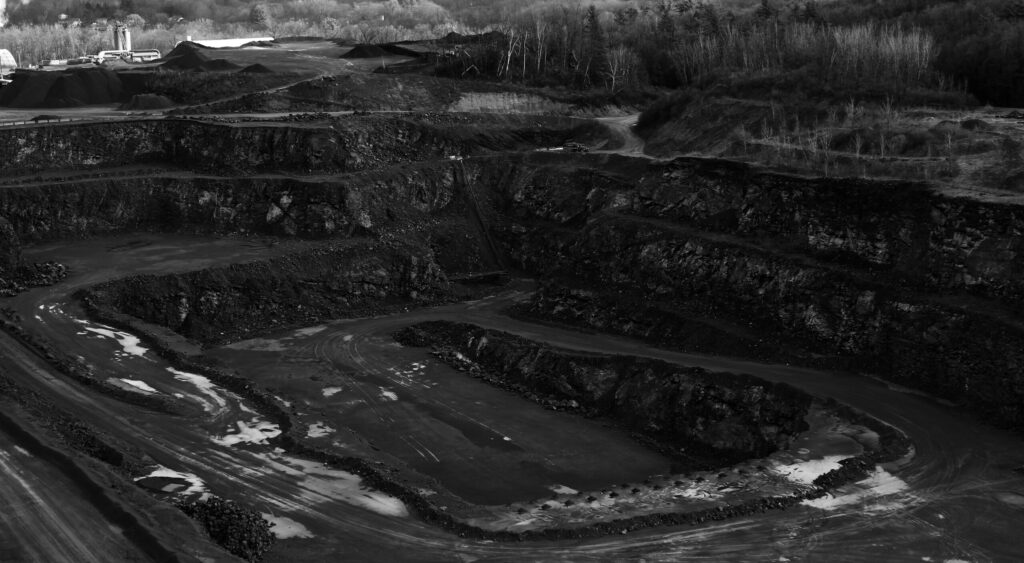
Wales has more than 2,500 abandoned coal tips. After storms Ciara and Dennis in February 2020, several landslides happened at these sites. One significant landslide at a disused tip in Tylorstown sent over 60,000 tonnes of debris into the Rhondda Fach River. These landslides showed the potential risk of harm to communities due to disused tips.
Of course, in the background to the birth of the Act, was memory of the Aberfan disaster in 1966, when an unstable mountainside coal tip collapsed and the ensuing landslip killed 116 children and 28 adults. The Mines and Quarries (Tips) Act 1969 followed and was the first UK legislation focusing on the safety and stability of mining waste. At that time the coal mining industry was still active, and the legislation was mainly aimed at regulating waste tipping from active coal mines and other mineral extraction sites.
Disused tips arise from pre-devolution activity, and their instability has been exacerbated by climate change, something which, again, has nothing to do with devolution.
Part 2 of the 1969 Act addressed disused tips, though they were seen as a minor issue at the time. As almost all coal tips in Wales are now disused, that position had changed dramatically by 2020 when the Storm Ciara and Dennis landslips occurred.
The Welsh Government asked the Law Commission to review the legislation governing coal tip safety, resulting in a report published in 2022. The Law Commission found that Part 2 of the 1969 Act does not offer an adequate management framework for disused coal tips.
The Act reflects the Law Commission findings and incorporates its recommendations on the formulation of an effective safety regime. While the Law Commission’s report focused on coal tip safety as specified in its terms of reference, the scope of the Act has been expanded to include other tips.
Analysis
The catalyst for the Act was the Storm Ciara and Dennis landslips, combined with the memory of Aberfan and the thought that this could have been repeated if the Tylorstown landslip had encountered human settlement. Disused tips arise from pre-devolution activity, and their instability has been exacerbated by climate change, something which, again, has nothing to do with devolution.
Ideally the problems posed by tip instability should be solved by major works removing the tips and replacing them with a safe environment. That is unlikely to happen though for reasons of scale and cost.
Realistically, the problems posed by tip instability could only be faced by managing the situation. Despite disused tips not being devolution related, the Welsh Government took on responsibility, leading to the Act and the safety regime it creates.
However, because of the historical legacy of the UK state owned National Coal Board, the Welsh Government can legitimately request support from the UK government for land remediation. And the UK Government has acknowledged responsibility by giving support. Furthermore, establishing the safety regime enables evidence-based requests, by the Welsh Government as all disused tips have been identified and assessed.
By accepting responsibility for an issue and responding constructively, the Welsh Government has strengthened its position both evidentially and morally when asking the UK Government for support.
Devolution politics should avoid deflection, as it deters public engagement and undermines valid arguments. Assuming responsibility – as the Welsh Government have with disused tips – leads to better policy decisions and law-making. Perhaps this is a lesson for the new Welsh Government to take into the future.
All articles published on the welsh agenda are subject to IWA’s disclaimer. If you want to support our work tackling Wales’ key challenges, consider becoming a member.