
Dr David Clubb reflects on five years of chairing the National Infrastructure Commission for Wales
In the summer of 2021, I had my first conversation with Lee Waters, then Welsh Government Deputy Minister for Climate Change, about chairing the National Infrastructure Commission for Wales (NICW).
NICW, established following the 2016 co-operation agreement between Plaid Cymru and Welsh Labour, had faced challenges. Uncertainty around leadership, the disruption of Covid, limited resources and a lack of clarity about its role had constrained its impact. After several months of reflection and discussions with officials, I accepted the appointment. Although I brought experience from the energy and sustainability sectors, as well as previous chairing roles, the decision was not without hesitation. Like many people stepping into senior public roles, I carried my own share of imposter syndrome.
Like many people stepping into senior public roles, I carried my own share of imposter syndrome.
One of my first priorities was to reshape the Commission. With ministerial support, we reduced the number of Commissioners from twelve to eight, created a Deputy Chair role and increased the time commitment of individual Commissioners without increasing the overall budget. We also refreshed the Commission itself, introducing new terms of reference and recruiting a largely new group of Commissioners. It was the right moment for a reset.
Looking back, building that team is the achievement of which I am most proud.
Building a team
NICW’s success has depended on how Commissioners and Programme Office staff worked together, bringing different experiences and expertise.
We invested in building trust, understanding one another and creating the psychological safety to challenge ideas openly. Strong disagreement was often part of our discussions, but always in pursuit of a shared purpose: helping infrastructure work better for the people of Wales, including future generations.
We grounded our work in five policies:
- The Well-being of Future Generations Act
- The Socio-economic Duty
- The Nature Emergency
- The Climate Emergency
- Long-term thinking
Alongside these, we developed five values:
- Inclusive
- Transparent
- Radical
- Challenging
- Practical
These values became a constant test of our recommendations. Were they ambitious enough? Inclusive enough? Practical enough to make a difference?
Syniadau uchelgeisiol, awdurdodol a mentrus.
Ymunwch â ni i gyfrannu at wneud Cymru gwell.
Thinking for future generations
With a remit extending up to 80 years into the future, future-thinking became a core part of our work. We commissioned essays in Imagining Wales in 2100, undertook training and joined Hwb Dyfodol, Wales’ public-sector futures network.
Despite the sophisticated methodologies available, I often returned to a simple heuristic: what will a child born in 2106 think about the decisions we are taking today?
It may lack academic rigour, but it is a powerful reminder that infrastructure decisions cast long shadows across generations.
Projects and recommendations
Between 2022 and 2026, NICW delivered major studies on renewable energy, flooding, climate adaptation and community engagement, and the state of Wales’ infrastructure sectors.
Strong disagreement was often part of our discussions, but always in pursuit of a shared purpose: helping infrastructure work better for the people of Wales, including future generations.
Each project was led by two Commissioners and supported by expert advisory groups who generously volunteered their knowledge and challenge. This strengthened both the quality of our work and the resilience of the organisation.
While Welsh Government engagement, with some recommendations, was often less substantial than we had hoped, infrastructure change is rarely immediate. Much of our work was intended to influence thinking over years and decades rather than months.
Learning through Wales
One of the most valuable aspects of NICW’s work was the programme of site visits across Wales. From Llanrwst and Pontypridd to Milford Haven, Fairbourne, Holyhead and Port Talbot, these visits enabled us to see challenges first-hand and hear directly from communities.
No report can replace standing in a place, understanding its history and speaking with the people affected by infrastructure decisions. These visits broadened our perspective and grounded our recommendations in lived experience.
Nature governance
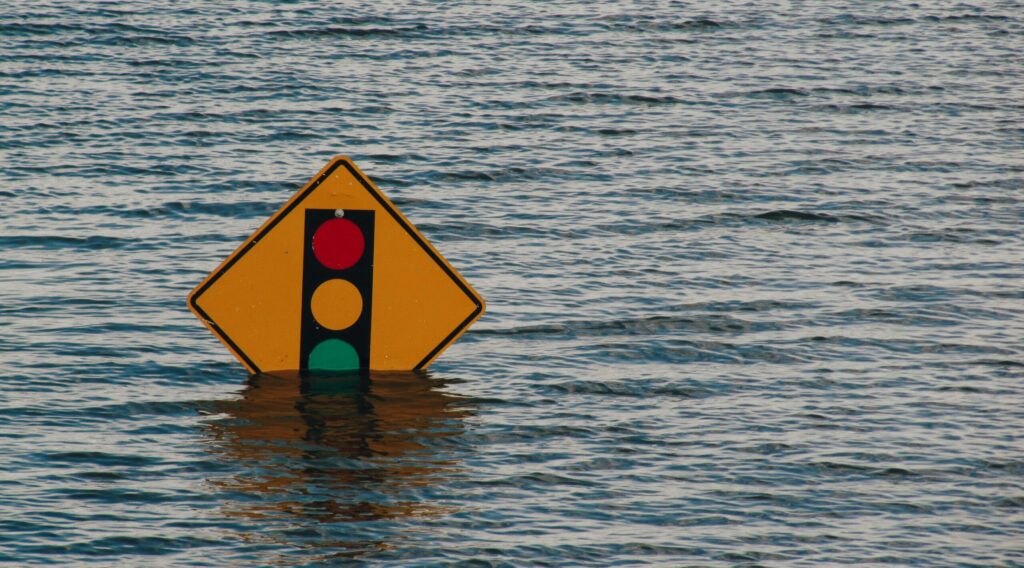
Perhaps the most unexpected legacy of our time at NICW emerged from a recommendation in our flooding report; that nature should be recognised as a stakeholder in decision-making.
We believe we became the first public-sector organisation in the world to include Nature within our governance and decision-making.
Reflecting on that recommendation led us to ask whether we should adopt the principle ourselves. That question evolved into commissioned research, pilot exercises and eventually the appointment of a Nature Guardian.
What began as a small experiment became one of NICW’s most influential pieces of work. The Nature Guardian contributed directly to our thinking and helped position NICW as a pioneer in this emerging area of governance. We believe we became the first public-sector organisation in the world to include Nature within our governance and decision-making.
Final reflections
When I think about my time at NICW, I think about ripples; how a single decision can spread across years, places and institutions in ways that are impossible to predict at the outset.
Lee Waters’ decision to appoint me led to a restructured Commission, a remarkable team, years of learning across Wales, ambitious recommendations and a globally significant experiment in nature governance.
None of that was inevitable. It was achieved by a small team consistently testing itself against a simple set of values: being inclusive, transparent, radical, challenging and practical.
More than any report or recommendation, I am proudest of the team we built together and the culture we created. We refused to accept that business as usual was good enough. Instead, we tried to ask better questions, think further ahead and contribute, in our own way, to a better future for Wales.
Diolch o galon i bawb sydd wedi rhannu’r daith hon gyda mi.
All articles published on the welsh agenda are subject to IWA’s disclaimer. If you want to support our work tackling Wales’ key challenges, consider becoming a member.