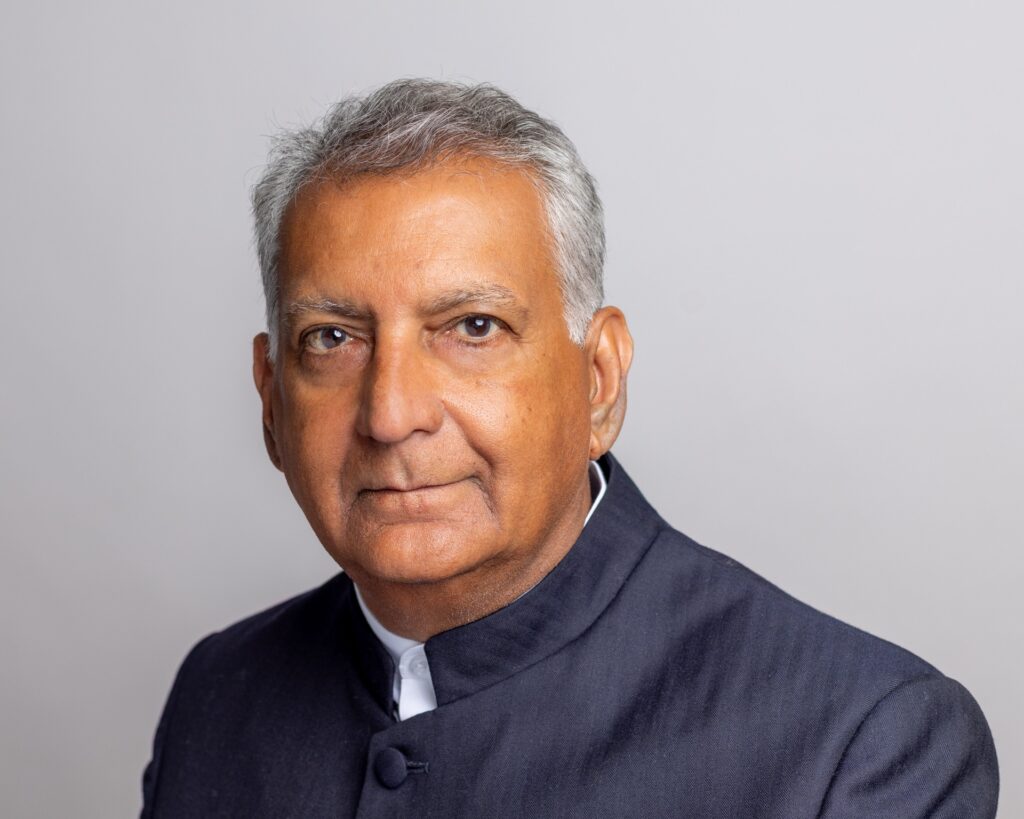
Neil Sachdev reflects on his first 100 days as Chair of Natural Resources Wales as the organisation launches a sobering State of Natural Resources report.
As I approach my first 100 days as Chair of Natural Resources Wales, much of my time has been spent where it matters most: out on the ground with our colleagues, seeing the work they do every day to protect Wales’ environment.
From incident response teams dealing with pollution events, to foresters restoring damaged habitats, from officers monitoring our rivers, to specialists managing coastal risks, their commitment is unmistakable. They are dedicated, skilled and deeply connected to the communities we serve.
Alongside this, I’ve begun meeting key Ministers, Members of the Senedd and partners across sectors. Those early conversations have been honest and clear, and each one has reinforced the same point: the pressures on Wales’ natural world are intensifying – and the systems we rely on are amplifying those pressures, not easing them.
And this isn’t just Wales’ assessment.
Last week, a UK government intelligence report concluded that the degradation of the world’s major ecosystems poses a direct threat to the UK’s security and prosperity. It warns of “cascading risks” – from food price shocks to geopolitical instability, driven by the collapse of ecosystems the UK relies on.
Those early conversations have been honest and clear, and each one has reinforced the same point: the pressures on Wales’ natural world are intensifying – and the systems we rely on are amplifying those pressures, not easing them.
When the body charged with assessing national security warns that environmental decline threatens economic stability and social resilience, it becomes impossible to treat nature loss as an environmental issue alone.
This is the context in which we publish our State of Natural Resources Report (SoNaRR) 2025. SoNaRR is not a gentle nudge to do a little more. It is a clear-eyed assessment of where Wales truly stands – and its implications should be understood by every policy and decision-maker.
The findings are sobering:
- Almost one in five species in Wales is now heading toward extinction;
- Only 40% of water bodies achieve good or high status;
- And Wales is consuming natural resources at a rate the planet cannot sustain.
To put it plainly: the systems sustaining Wales are not sustainable.
And if this continues, the damage will accelerate, hitting hardest those already facing the greatest economic and social pressures. Environmental decline does not land evenly.
Syniadau uchelgeisiol, awdurdodol a mentrus.
Ymunwch â ni i gyfrannu at wneud Cymru gwell.
What SoNaRR shows is that our biggest environmental pressures are not confined to traditional environmental domains. They are woven through the systems that shape daily life: how we heat our homes, how we travel, how we grow and consume food, how we use land, and how we invest in infrastructure and places.
Our teams on the ground are working harder each year, but much of what they are tackling are the consequences of decisions made far upstream.
Wales cannot keep firefighting symptoms while leaving the systems driving the harm unchanged.
That is why, alongside SoNaRR, we are publishing Bridges to the Future – a framework co-developed with the Future Generations Commissioner, Derek Walker. Derek’s leadership and collaboration have been critical in shaping a shared route from evidence to action. His foreword is unflinching: restoring nature is not optional; it is essential for long-term health, resilience and economic stability.
Bridges to the Future looks across the four systems that most heavily determine environmental outcomes: food, energy, mobility and the built environment – and sets out Five Bridges Wales must now cross:
- Redesign everyday systems so they reduce demand, not increase it.
- Restore nature as essential infrastructure – not an afterthought.
- Build a regenerative economy that grows value without degrading ecosystems.
- Realign governance so long-term outcomes outweigh short political cycles.
- Deliver a fair transition that protects those most exposed to environmental harm.
These are not abstract concepts. They point directly to actions Wales can take now: future-proofing homes, designing connected places that reduce car dependency, supporting resilient local food systems, restoring catchments and wetlands to manage flood risk, and ensuring public money drives circular, low-carbon supply chains.
Wales must stop treating nature loss as something that can be managed through marginal improvements to existing policies.
And they underline an uncomfortable truth: Wales must stop treating nature loss as something that can be managed through marginal improvements to existing policies.
The UK-wide intelligence assessment makes this brutally clear. Nature loss is no longer simply a conservation concern. It is an economic and security threat, with implications for public health, infrastructure resilience, supply chains and food systems.
This matters acutely now, because Wales is months away from a Senedd election that will shape the next decade of policy and investment. The next government – whatever political shape it takes – will inherit environmental pressures that are not slowing down.
But government cannot do this alone.
No single organisation can.
Wales cannot achieve environmental recovery through environmental policy alone.
The levers sit across energy policy, agricultural support, transport planning, fiscal incentives, housing, procurement and infrastructure.
In other words: if it shapes daily life, it shapes nature.
And SoNaRR is unambiguous about the consequences of delay: costs rise, resilience declines and future choices narrow.
But SoNaRR is equally clear about what happens if we act with urgency and coherence. Wales can still build a future that is fairer, greener and more resilient – a nation that protects its people by protecting its natural world.
Gofod i drafod, dadlau, ac ymchwilio.
Cefnogwch brif felin drafod annibynnol Cymru.
As I approach my 100th official day in post, my commitment is that we at NRW will play our part. We will continue to provide evidence that guides decisions. We will challenge where necessary and support where we can. And we will work with partners across every sector to turn ambition into practical delivery.
But policymakers and society must now confront the scale of the moment.
Wales does not lack vision, values or legislative intent. Quite the opposite. We have world-leading laws – the Well-being of Future Generations Act and the Environment Act – and a growing public appetite for long-term thinking. These are foundations many countries envy.
What Wales does currently lack – and what SoNaRR exposes – is consistency, alignment and pace.
This is not a warning about the future.
It is a reckoning with the present.
If we act now – with urgency, alignment and honesty – Wales can lead not only in ambition but in delivery.
If we don’t, the next SoNaRR will simply record deeper harm, higher costs and narrower choices.
The choice is still ours. But the window for choosing is narrowing.
All articles published on the welsh agenda are subject to IWA’s disclaimer. If you want to support our work tackling Wales’ key challenges, consider becoming a member.