
Ross Davies tells Ahmed Alsisi’s story, and his campaign to provide better support for grieving families.
Ahmed Alsisi can still recall the phone call in the early hours of the morning. The trembling voice at the other end of the line was instantly recognisable as that of the young mother whose infant child’s funeral he had presided over just days earlier.
Alsisi had continued to check in on the young woman from his funeral director’s office in Cardiff, aware of the unspeakable grief she was shouldering. But his heart quickened as she told him that the pain of loss was too much and she was ringing to say goodbye. After ascertaining that she had taken an overdose, Alsisi raced to find her address in his paperwork and phoned the emergency services, which rushed her to hospital just in time.
“It was a cry for help, but we managed to save her life,” he says.
The anecdote throws into sharp relief how little prepared we are for grief; how desperately hard death can be for those left behind. And, how, if left unattended, bereavement can beget more tragedy in the form of suicide. In a country such as Wales – which has one of the highest suicide rates in the UK – these risks cannot be ignored.
Despite Cardiff’s ethnically diverse makeup, there were next to no funeral directors in the city able to cater multi-faith requirements.
Alsisi knows about death all too well. Born in Gaza in 1989 during the first Palestinian uprising, or Intifada, he can still hear the gunfire that rang out daily across the refugee camp where he spent his childhood. “Some of my earliest, most vivid memories are of death,” he says.
Alsisi and his family fled to the UK in 2000 when he was 10, applying for asylum in Cardiff. Those early years were tough, as he acclimatised to a new language and culture, while mourning the family and friends he had left behind in Gaza. He was bullied at school and encountered sexual abuse, compounded by flashbacks and nightmares.
“I was angry for a long time and found it difficult to connect with people,” says Alsisi, who would eventually be diagnosed in adulthood with post-traumatic stress disorder, or PTSD. “But I believe those darkest moments provided me with a unique perspective on grief and loss.”
Alsisi never set out to be a funeral director. The seeds were sown, however, when one day the imam at his local mosque put a call out for help arranging a funeral in accordance with the Muslim faith. In Islam, and other religions such as Judaism and Hinduism, burial of the dead is ideally conducted within 24 hours of death.
Innovative. Informed. Independent.
Your support can help us make Wales better.
Despite Cardiff’s ethnically diverse makeup, there were next to no funeral directors in the city able to cater multi-faith requirements. This led to Alsisi and his brothers, AJ and Amir, launching Cardiff’s first Muslim-run funeral director, White Rose Funerals, in 2015.
In the intervening decade, Alsisi has become arguably Wales’s leading advocate for improvements in bereavement care, culminating in a national campaign aimed at providing better support for vulnerable people in grief.
The campaign, which Alsisi often refers to in our conversation as “a movement,” is built around three pillars. The first is focussed on making suicide prevention training mandatory for funeral directors — as well as teachers, NHS frontline staff and emergency responders — as part of a national aftercare package.
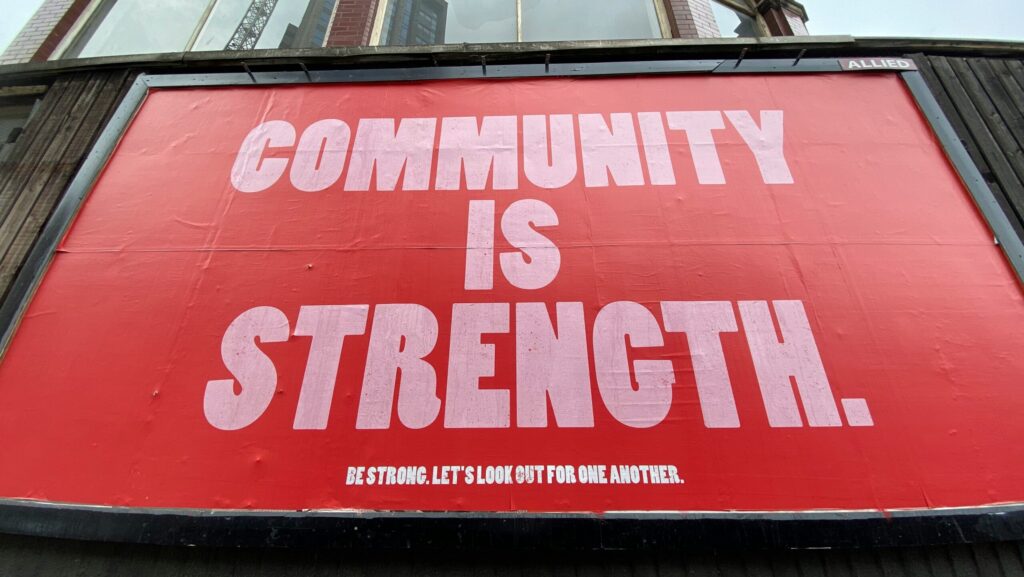
“Suicide prevention shouldn’t just be the work of doctors, counsellors or charities,” says Alsisi. “This is one of the most important issues of our time. Anyone who encounters families through loss has a vital role to play. When we work as a community, lives can be saved.”
All too often, minorities, including deaf people and those with language and literacy barriers, receive delayed or inappropriate support, and are ultimately left out of the grieving process.
Alsisi also believes bereavement should be a more inclusive process. All too often, minorities, including deaf people and those with language and literacy barriers, receive delayed or inappropriate support, and are ultimately left out of the grieving process. The issue is close to Alsisi’s heart, having witnessed his deaf aunts back in Gaza struggle to come to comprehend the death of loved ones. “British sign language needs to be introduced into Wales’s bereavement services,” he says.
Lastly, Alsisi is calling on the Welsh Government to allocate funding for a public mortuary in Cardiff. Equipped with state-of-the art MRI/CT scanning technology, its establishment would allow for post-mortems to be conducted with “more humanity and dignity,” not to mention quicker burials and cremations.
As the only country in the UK without a public mortuary, Wales is reliant on local authority-run hospitals to house bodies. This puts further pressure on coroners and NHS facilities, sometimes resulting in mistakes. A case in point, The Grange Hospital in Cwmbran was last year stripped of its mortuary status after a mix-up saw it release the wrong bodies to two bereaved families.
This has also led to an increase in forensic services being outsourced across the border to England, further adding to delays. Alsisi despairs. “How can, say, a Muslim family, grieve properly, when they have to wait over four weeks to bury their loved one?”
Robust debate and agenda-setting research.
Support Wales’ leading independent think tank.
Estimates suggest that a public mortuary would cost between around £3 million and £7 million. According to Alsisi, Finance Secretary and former First Minister Mark Drakeford — who spoke at White Rose’s Bereavement and Mental Health Conference in Cardiff in November — has indicated that public funding is available. It has also been backed by Conservative MS Mark Isherwood, leader of the Senedd’s cross-party group on funerals and bereavement.
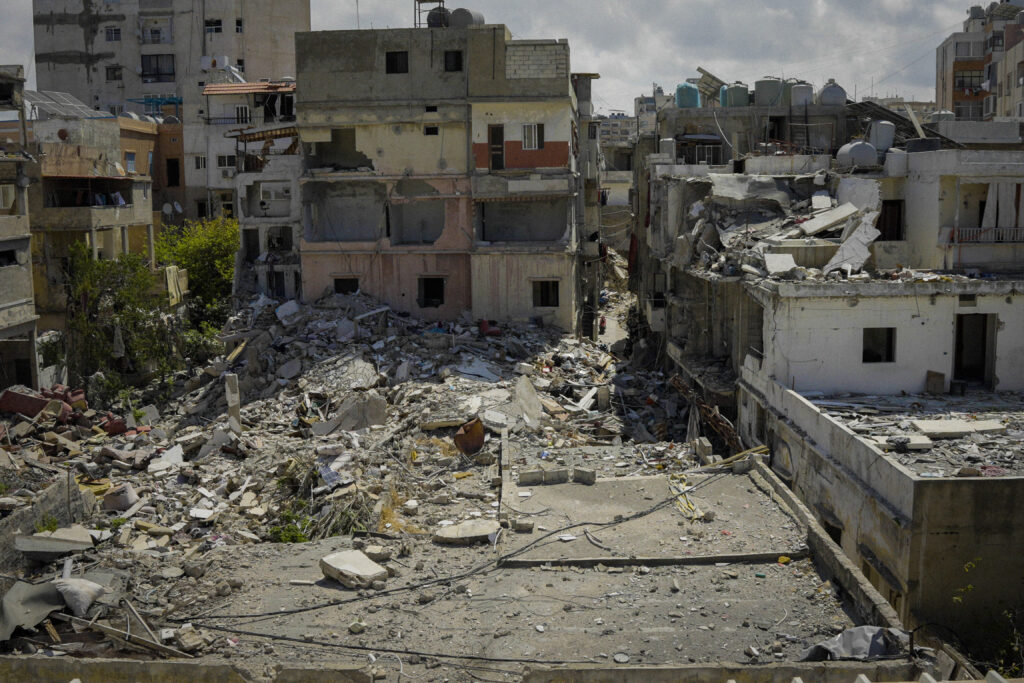
For Alsisi, death remains a daily presence, not only in his capacity as a funeral director, but through the ongoing war in Gaza. “It’s with me every day,” he says of the latter.
But grief needn’t be faced alone, he insists. “There is always hope.”
All articles published on the welsh agenda are subject to IWA’s disclaimer. If you want to support our work tackling Wales’ key challenges, consider becoming a member.