
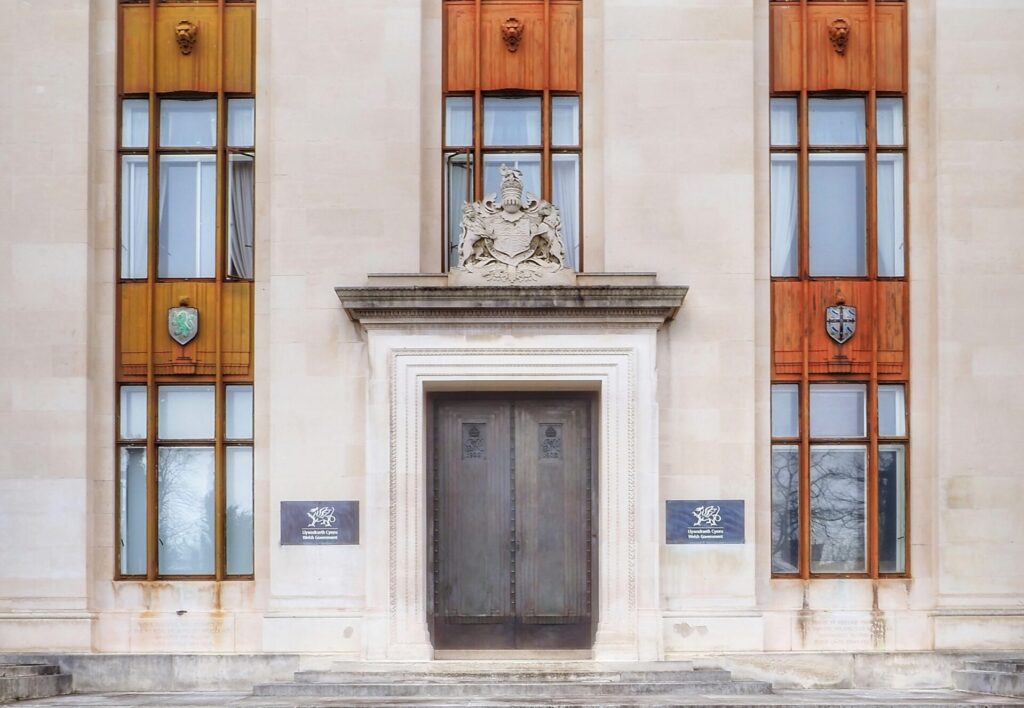
Joe Rossiter considers the new Welsh Government’s proposals to reform devolved governance
As the dust settles on a seismic election, our new government has been assembled and new Cabinet Ministers and Deputy Ministers are settling into their new roles.
The question now is: how will the party seek to govern differently to their Welsh Labour-led predecessors?
Plaid Cymru effectively cultivated a reputation as being ready to govern during the Senedd election campaign. This effort commenced with the publication of a comprehensive economic strategy eighteen months ahead of the election. This was followed closer to polling day with a First 100 Days Plan and a Manifesto which were both framed as actionable plans for government. Each document was geared towards portraying the party as ready to govern, shifting the emphasis towards governing effectively over a focus on achieving independence (an issue which was at the forefront of the 2021 manifesto).
At the forefront of this plan to govern is an ambitious government reform agenda. The party stated that ‘underpinning our programme is a conviction that our government must be a better government’. The new government’s ideas for how you can create the conditions for better government in Wales deserve consideration as they begin the hard work of turning policy pledges into action.
Fixing the plumbing of government is often an unglamorous pursuit, but it is a worthy one in Wales’ case.
To bring this better government to life, the new Welsh Government must offer new answers to the nation’s systemic and entrenched challenges. A set of challenges that successive Welsh Labour Governments have attempted to solve – such as a poorly performing economy, comparatively poor educational performance and a health service which is perennially struggling to meet ever-increasing demand. It is not for the want of trying, after all, that these challenges haven’t been solved. They are significant, wicked challenges which devolved government has only some of the levers to solve.
In order to tackle said challenges, the new Welsh Government must establish their long-term strategy, which clearly sets out the systemic challenges facing Wales, the big trade-offs they are willing to make in order to solve them and their process for governing.
We often discuss the delivery gap in Wales – our (broadly-speaking) strong devolved legislation and the poor delivery against it. This government appears determined to bridge this gap in order to deliver tangible progress against their priorities. So what are their ideas?
The First 100 Days Plan and Manifesto provide an indication of what structural changes are priorities, in their pursuit of a ‘new approach to government’. These include creating a new ‘One Welsh Public Service’, developing a ‘National School of Government,’ establishing a new Welsh ‘Cabinet Office’ and appointing a new Cabinet Minister for Government Effectiveness in Dafydd Trystan Davies. In addition to this, we have the pledge to (re)create a new Welsh Development Agency to drive improvements to consistently lagging economic performance (a matter I’ve considered at length previously).
Taken together this forms a sizable and ambitious reform agenda. Whilst at time of writing all we have are pledges which are (mostly) sentence-long commitments, I’m going to look at what these pledges may mean and how they could contribute to strengthening devolved government and improving the performance of the devolved state. There is much that is unknown but it’s worth considering this agenda as it begins to take shape in Cathays Park. Fixing the plumbing of government is often an unglamorous pursuit, but it is a worthy one in Wales’ case.
It’s important to state at the outset that on 8 May Plaid Cymru effectively won a mandate for change, with their reform agenda at the forefront of their winning policy offer to the electorate. If the new government wishes to rewire the devolved state, they will need to do so as a priority – in order to achieve the rest of their ambitious goals. The electorate want change, Welsh Government must deliver on its promise to them.
The reform agenda will also be delivered by a party and ministerial team (beyond new Finance Cabinet Minister Elin Jones), who have little-to-no experience of governing. There are positives to this – such as new ideas, fresh talent and bringing external experiences into government – but it of course has its drawbacks too, especially when you are seeking to reform how devolved government works.
So, with that being said, let’s consider the reform proposals in turn.
Syniadau uchelgeisiol, awdurdodol a mentrus.
Ymunwch â ni i gyfrannu at wneud Cymru gwell.
Strengthening the centre? A Welsh Cabinet Office
The First 100 Days Plan pledges to ‘create a digitally enabled Welsh ‘Cabinet Office’ to drive our priorities forward including – policy, delivery and data specialists’. Presumably this would mean an expansion in scope and size of the pre-existing Welsh Government Cabinet Office, which is ‘primarily responsible for the identification and planning of Cabinet Business,’ such as ‘the organisation of Cabinet meetings and the production of Cabinet Minutes’. The fundamental way government functions, of the civil service providing advice to ministers for them to make decisions on, has not changed since the dawn of devolution. It’s prime for a refresh and reinvention – with a focus on communicating what the overarching priorities of the government are. This is a requirement internally as well as externally.
The broader intention behind this proposal is, likely, to strengthen the centre of devolved government and ensure that the First Minister, alongside a team of senior civil servants, remain central to overseeing the delivery of the government’s priorities. This is a sensible idea which could provide a sense of purpose, direction and ultimate leadership to the new government. This means providing a strong and consistent set of principles, values and priorities from the centre – which provide direction to the rest of the civil service machine – emboldening them to make decisions which are in alignment.
Of course, the concept of a Cabinet Office is taken from the Westminster Government. Established in 1916, its modern purpose is, in the words of the Institute for Government, focused on ‘implementing high priority policies, especially ones spanning multiple departments’ in addition to managing civil service reform. It also has roles to ‘facilitate collective decision making,’ ‘conflict resolution,’ ‘policy delivery’ and ‘strategy and policy development’ – in addition to corporate functions, security responsibilities and responding to emergencies. The use of the Cabinet Office terminology suggests that the new Welsh Government have a similar purpose in mind with their proposal. The degree to which this is a sensible model to replicate, given that recent UK Government’s have struggled with the same challenges of delivery over recent years as Welsh Government, is a debate worth having.
How well this approach translates from a Westminster system to Wales is also unclear. Welsh Government itself is certainly smaller, with a smaller number of people in the room where decisions are made and with a significantly smaller civil service machinery. The UK Cabinet Office alone has over 15,000 staff members, about triple the number working in the entire Welsh Government civil service.
So, how might a Cabinet Office work in a Welsh context?
A stronger centre of government should, in principle, ensure the government is able to prioritise, providing policy consistency and a long-term direction – as well as an overarching strategy for how to achieve their goals. Importantly this means that the trade-offs inherent in decision making (particularly the case in our devolved system, where we have a stretched budget and limited powers) are driven from the centre. With the broader policy trade-offs required to deliver Plaid Cymru’s Manifesto commitments not clearly outlined (a subject I’ve written about previously) there are a set of difficult decisions to be made about where money is spent and where cutbacks are required. These decisions should be owned in the centre of government and supported by an enhanced Cabinet Office.
A new Cabinet Office would need to be delivered by a dedicated team of civil servants, which further strengthens the ability of the First Minister to keep on top of progressing the delivery of their priorities. The Office could be supplemented by separate secretariats which look at individual policy priorities. These could function similarly to Mission Boards, which the IWA proposed in our Cenhadaeth Cymru: Mission Wales report. These could easily be translated across Plaid Cymru’s five priorities (which function similarly to missions).
The composition of a Welsh Cabinet Office is also interesting. Will it be a forum for elected representatives and civil service leaders, or will it also feature external expertise, challenge, scrutiny and ideas? This government could act to bring those expected to deliver policy into the mix as well. That the wider pledge includes ‘policy, delivery and data specialists’ suggests they may cast their net wider in their composition (this would echo a Mission Board approach).
An effective Cabinet Office could provide a coordinating role within government. This could provide clear direction, not only to those in government, but also those around government. This clear strategy and direction-setting can help the private sector to invest in Wales with confidence, knowing where the government stands on key issues and what their long-term vision for the nation is. Certainty of where government stands can provide a central pillar of stability around which other actors can orient themselves and their activities around.
The Cabinet Office proposal has promise, but requires much further detail to consider its potential impact and scope. It provides the scaffolding for further reform to Welsh Government.
Creating a stronger centre of government doesn’t mean simply adding an added layer of managers (which could be the civil service response to Plaid’s challenge). It means empowering ministerial autonomy, facilitated by a purposeful and outcome focused civil service. This also requires the identification of talent, from all levels, across Welsh Government and gearing them towards achieving the government’s prime priorities. Let’s get ambitious people, with innovative ideas right at the heart of helping solve our most difficult challenges.
A strong centre of devolved government, facilitated by a Cabinet Office, makes sense as an approach if Welsh Government is to make progress against the tough, cross-cutting challenges the nation faces. There are a list of wicked challenges that the system (and particularly the devolved system) is not currently well designed to solve. Problems like child poverty, population health, the poor performance of public services, climate change or a continually sluggish economy all require pan-government responses. Centralised oversight on how the government as a whole tackles these challenges could be beneficial. Political leadership driven from the centre could also help reform how we make policy decisions, to ensure that the government takes a long-term lens to a set of priorities and challenges which are cross-cutting and complex in nature. A strong, innovative, outcome oriented centre could be transformative.
This approach could help to break down policy silos, between different ministries and between ministers themselves. A stronger centre of government, enabled by a Cabinet Office could, in principle, ensure that the First Minister has a stronger grasp on the delivery of their priorities.
Early signs of a less-silo’d policy context are promising. Cabinet Minister for Culture and Sport Heledd Fychan has indicated that more health funding could be spent on culture and sport. Moving money out of the health budget will be essential to delivering a meaningful shift towards a preventative approach to health, focused on increasing wellbeing and population health as key long-term outcomes. This does, however, sit somewhat discordantly with the continued prioritisation on NHS waiting lists and NHS investment (which both require increased investment). You can’t have your cake and eat it (unless you are willing to significantly cut other public services). That the health department is responsible for almost 50% (and growing) of the entire Welsh Government budget skews the power dynamics in government – this needs to be overcome by a broader focus on prevention and public health, with ownership (and resources) shared across government to a greater extent.
Gofod i drafod, dadlau, ac ymchwilio.
Cefnogwch brif felin drafod annibynnol Cymru.
What the pledge means in terms of the Cabinet Office being ‘digitally enabled’ isn’t particularly clear at this point. Although, the First Minister has indicated that the digital in this process could mean more transparency on how government is performing against key election pledges. A digital dashboard which can provide real-time feedback on progress has been mooted. This does, however, sit unevenly with the overall lack of data and evidence Welsh Government has previously had access to, which has often been a constraint. This is a challenge to overcome and there are international examples of how a ‘live data’ approach is being implemented successfully. As a small nation, it feels we should do better at this – whilst lots of data is held at local government level, there must be an opportunity to share and learn iteratively to help achieve national goals.
The degree to which a lack of (and the nature of) centralised control held back previous Welsh Government’s is a matter of debate. Judging by responses to Lee Waters interviews as part of his Y Pumed Llawr project – there is a need to change the identity and culture of the centre of government. Interviewees indicated an inherent caution in the ‘corporate centre’ of Welsh Government, which constrains innovation and obstructs delivery.
The Cabinet Office proposal has promise, but requires much further detail to consider its potential impact and scope. It provides the scaffolding for further reform to Welsh Government.
A new Cabinet Minister role
Further to the creation of a new Cabinet Office, we also have a new Ministry in Welsh Government, aimed at improving the ability of the devolved state to deliver better outcomes. In comes a Cabinet Minister for Government Effectiveness & the Constitution, with Dafydd Trystan Davies in the role.
This role takes on most of the responsibilities for governance reform, including; oversight of government priorities, oversight of the Programme for Government, supporting oversight of the Cabinet Office and One Wales Public Service, alongside the implementation of the Well-being of Future Generations framework.
The role will need real teeth in order to effectively deliver its remit.
It’s important to note that this isn’t the first time a Welsh Government has appointed a Minister with oversight for, broadly speaking, delivering the government’s priorities. Both Carwyn Jones and Eluned Morgan’s Welsh Government’s had their equivalents. We most recently saw Eluned Morgan appoint Julie James as Minister for Delivery. This role coordinated the delivery of Welsh Government priorities across different departments. A very similar remit to the new Cabinet Ministers.
It makes sense to give an individual the responsibility for delivering the government’s priorities. Similar to the above, to ensure that there is strategy and control over what the government is doing.
Dafydd is also a shrewd pick for this role. A consensus builder by nature, which may also be required, given this is, after all, a minority government. He was a Welsh Government Special Advisor during the final months of the Co-Operation Agreement, so has experience working inside the Welsh Government. Indeed, he describes his learning whilst in this role about ‘the weight of the machine’ and how devolved government works and doesn’t work as ‘probably a revelation’. Let’s hope this revelation has brought actionable insights to bring forward.
The role will need real teeth in order to effectively deliver its remit. The ability to coordinate partnership working across Ministerial portfolios and across government (horizontally and vertically, with civil servants) will be necessary. The presumption would be that an enhanced centre of Welsh Government would give the Cabinet Minister the power and structure to do so. The risk is that without that power effectively imbued from the First Minister, the remit can become directionless or purposeless. It’s all dependent on a clear articulation of what the purpose and priorities of the government are as well as their route to get there.
This role could also enable policy decisions to be considered in a broader pan-government basis. This could help the government to effectively navigate policy trade-offs and embrace innovation in how we tackle cross-cutting, complex problems.
A National School of Government
A further commitment related to government is the pledge to ‘progress plans for a Welsh National School of Government’.
This is a long standing commitment for Plaid Cymru. As part of the 2017-18 Welsh Government budget the Welsh Labour Government and Plaid Cymru agreed to ‘work to take forward a National Academy of Government’. The 2021 Co-operation Agreement contained a commitment to ‘explore how setting up a National School for Government might contribute to the principle of a One Wales Public Service’. Welsh Government’s 2024-25 budget allocated funding towards progressing the ‘next steps’ following ‘exploratory work’ on the topic. Little progress has been made to bring this idea to life to date. It’s therefore an idea that is on the shelf ready to be picked up.
This proposal is an attempt to bridge the aforementioned delivery gap. We have a suite of ambitious devolved legislation, but without the outcomes to match. Adam Price, our new Cabinet Minister for Enterprise, Connectivity and Energy has written a blog about the idea. In it, he argues that whilst Wales has accumulated further devolved powers, it has done so without the ‘institutions to make these powers meaningful: a school to train people in the art of governing’. He uses the Well-being of Future Generations Act as an example of where policy ‘struggles for implementation not because it lacks merit but because it requires governance approaches for which no one has been systematically prepared’.
Similarly, the aforementioned Dafydd Trystan Davies states that he believes we need ‘a School of Government or a mechanism to develop that culture which is willing to maybe take some more risks’. He notes that civil servants are ‘risk averse by nature’ but, to make progress we need to be ‘willing to take calculated risks’. He likewise notes the ‘enormous amount of really impressive public servants, who, if given the opportunity and given the right structure, could really thrive in a more independently minded Welsh civil service’.
So, the School of Government is intended to provide development, support and upskilling opportunities for the civil service and public sector in Wales. The Government needs to outline what the purpose of a school is, what behaviours and practical knowledge do we want it to provide and how will this link to achieving tangibly different outcomes? What will be its underpinning pedagogy and what scale will it be rolled out at and to what layer of government? Will it be an enhanced Academic Wales programme? Likewise it can’t replicate standards and behaviours that the civil service are already meant to be delivering. Welsh Government and public bodies do already have established ways of working, after all.
It’s therefore an idea that is on the shelf ready to be picked up.
It would make sense that a School of Government in Wales should orientate itself around bringing the Well-being of Generations Act to life. The Act is, after all, essentially a long-term behaviour and cultural change mechanism for Wales’ public bodies. Such a School could enable these values to become further imbued across public servants in Wales. If we are to fix the increasingly complex challenges Wales faces then new, long term approaches will be needed, and they correspond directly with the ways of working of the Act.
A School of Government could be a means to tackle the adage of Prof. Kevin Morgan that, in Wales, ‘good practice has been a bad traveller’. There is lots of good, innovative delivery that is happening in Wales, but it never leads to wider take up in practice. A School could provide a forum for displaying best practice in public sector delivery and display how they can be replicated across different parts of the state. We are a small nation – this should be possible.
A School could also retip the balance from policy design to policy delivery – from focusing on process rather than outcomes. An outcome orientation, which provides public bodies with the confidence, knowledge, skills and autonomy to fix local challenges in innovative ways – ways which help deliver the wider outcome that Welsh Government are attempting to achieve. This could be empowering and provide a clear wider unifying purpose to the devolved state.
One of the key purposes of such a body, should be to make our public sector more agile and innovative.Whilst a School for Government would be helpful in this endeavour, it must be underpinned by structural change to enable this to happen. If the way that we expect public bodies to deliver their remits has radically changed, then the structures must be there to enable them to do this. Training can help facilitate this.
There is the question of whether there is a need to establish new core values to public services’ in Wales.
Yet, how such an institution will help public bodies in Wales to navigate the wider structural constraints against them delivering their respective remits innovatively also needs to be considered. What’s the point of asking public bodies to deliver with long-termism in mind, for instance, if they are obstructed by shrinking budgets and restrictive annual budget cycles? How would a School overcome some of these wider constraints which have hindered the delivery of the Well-being of Future Generations Act?
If it meaningfully realigns the behaviour of public services, this is, of course, valuable. But we can’t merely teach our way to a better civil service, we need to realign incentives and move resources around whilst providing strong political leadership. A School thus needs structural change to how we organise public services to accompany it.
How a School of Government is structured and funded is also an important consideration. It will need cross-party support and long-term financial certainty in order to have an impact both today and over the long term. Engendering broad buy-in will be essential.
Any new institution also has to take into consideration how it will add, or work alongside, plans from UK Government to set up their own National School of Government and Public Services – with a fairly similar remit. That is not to say that Wales shouldn’t have its own equivalent, but these new institutions will need to collaborate and learn from each other in some instances. Where reform agendas are shared, learning, evidence and ways of working should be shared.
One Welsh Public Service
The First 100 Days plan states that a Plaid Government would bring together Welsh public services as ‘One Welsh Public Service and establish core values that will drive’ their work.
This is the depth of the pledge, which was not expanded upon in the party’s manifesto. This leaves a number of open questions on the scope and scale of the change envisaged. Is it merely an administrative change? Who does it include? Does it include a better sharing of data, for example? How does this affect leadership and remits?
It is fair to say that the way we currently constitute government and public bodies in Wales is rife with duplication and siloed working. We have 22 local authorities, seven health boards, four educational consortia, four Corporate Joint Committees, 15 Public Service Boards and 55 Public Bodies overall (at least, that’s how many currently fall within the remit of the Future Generations Commissioner). We’ll also be adding the Development Agency into this mix (I’ve written previously about how this needs a tight remit to avoid duplication).
The argument that Wales, for a nation of its size and resources, features too much duplication and layers of governance, is now fairly established.
But a view to what a One Wales Public Service looks like and what this change will achieve is vital. For if there isn’t one, what’s the point?
There is also the fact that in Wales, the executive doesn’t hold much power – it’s power is spread throughout our public bodies. This is particularly the case with the power over delivery of policy. Welsh Government relies on local authorities (primarily) and a number of other public bodies to deliver its policy goals. This dense middle layer in practice acts to erode the power of Welsh Government to deliver. This could be shown in particularly sharp relief should next year’s local elections deliver councils which are led by parties with different priorities to the new Welsh Government.
At the very least, the new Welsh Government has come into office asking the right questions.
This lack of executive power does raise the question of why a Plaid Cymru Government (as outlined in their First 100 Days Plan) would kickstart a number of reviews, quangos and commissions on key policy issues. They pledge to create a new national commission to consider the next constitutional steps, commission a new independent review into the Welsh NHS (alongside a review of health data and rapid diagnostic centres), commission researchers to examine their Child Payment proposals, conduct a national skills audit, conduct a new national school estate audit and a review of Higher Education funding, to name but a few. For a government that seeks to be ‘outcome focused’, this is a lot of process which creates additional layers and hurdles to decision making. For a government that wants to be outcome focused there is an inherent contradiction. Whilst it’s fair to say that Wales’ challenges are systemic, and therefore need radical policy responses which require consideration ahead of implementation, the party doesn’t have unlimited time, or political capital, to delay making difficult decisions. Their mandate for change is there, they can use it now to make the big decisions to rewire the state in order to make it capable of delivering this ambitious platform for change.
There is the question of whether there is a need to establish new core values to public services’ in Wales. The 7 Nolan Principles apply to all Welsh public bodies and the prior Welsh Government already asserted a set of values and ways of working. Is there some distinctly Welsh principles we want to enshrine? Would these supersede the principles already established in the Future Generations Act? If not, what are they and how will they lead to better government?
If there is a need for culture change in the Welsh civil service then a School of Government and a conception of a One Wales Public Service could help provide an answer to key questions; what is the culture now, what do you want it to be like and therefore how you can go about creating such a culture. Do you think it needs to be more ambitious, more open to challenge, more innovative and work more collaboratively? Maybe you want the civil service to feel greater rooted in producing outcomes – helping to provide greater alignment between the activities taking place across Welsh Government and the delivery of tangible improvements to people’s lives. Plaid Cymru enters government with positive mood music about delivering ambitious outcomes – but being an outcome oriented government requires a reorientation of the civil service – which will require political leadership and the dedication to see a reform agenda through. These values and ways of working are far easier to put into a speech than achieve, after all.
Without further detail, it is unclear what this pledge means in practice.
Putting the purpose in governance reform
The proposals from the new Welsh Government acknowledge the reality that in order to achieve their policy ambitions, the Plaid Cymru Government will need to reform the state.
How you go about this is a complex question. At the very least, the new Welsh Government has come into office asking the right questions. Yet, the proposals as they sit today provide an understanding of where we may have gone wrong, without a full picture of how we can go right.
Whilst these questions and ideas may be the right ones, there is a balance between acting at haste (as denoted by a First 100 Days agenda) and getting a reform agenda right, setting up government in a better state to tackle our complex systemic challenges.
In this article I am interpreting pledges which are one sentence long in most places, which indicates the work to be done. Turning this set of pledges into a reform agenda means filling in these blanks.
If this is a government which turns process into action, then we at least have a list of where the action will start.
All articles published on the welsh agenda are subject to IWA’s disclaimer. If you want to support our work tackling Wales’ key challenges, consider becoming a member.