Colin Thomas reflects on what it was like being asked to contribute to the ‘Personal Archives’ of the National Library of Wales
It was flattering to be asked to hand over files and letters to the National Library, but disconcerting too. Somebody must have spotted my age – 87 – and decided it was time to make a move.
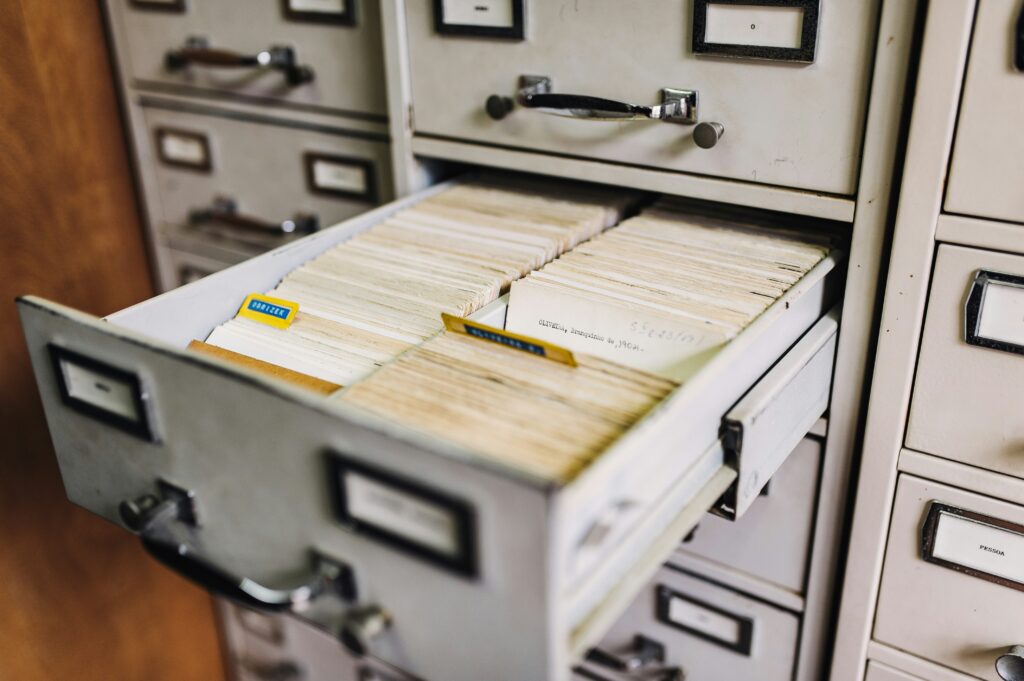
The operation itself was painless. Robert and Rhys were tactful, courteous and efficient, emptying out my filing cabinet in two days. I pointed out that the fattest files, optimistically entitled ‘Future Programmes 1 & 2’, contained a profusion of ideas – but ideas that television commissioning editors had considered and then rejected. It included one that I had forgotten all about,God’s Revenge, which is about the return of religious fundamentalism when it had seemed to be disappearing. Not for us, said both C4 and the BBC.
Why did my files make their way to Aberystwyth? I have now made the discovery that they have found their way to that part of the Library designated ‘Personal Archives’: ‘archives of individuals and families who have played a significant part in the life of the nation in various fields.’ My text files join not only those of Lloyd George but also those of Doggie Hubbard, for ‘those interested in dogs.’
Innovative. Informed. Independent.
Your support can help us make Wales better.
The National Library already holds many of the television programmes I have made in their Screen and Sound Archive, some of which I had attempted to summarise in Rethinking Documentary – my contribution to the book Documentary in Wales. But one important part of that was missing from the Archive – what then had the label ‘enhanced ebook’ and what I had then described as a completely new way of producing documentaries ‘combining text, video and interactive graphics’. With the help of S4C Digital, I had produced two of these, thinking that I was at the cutting edge of new technology – Y Ddraig a’r Eryr/The Dragon and the Eagle on Wales and the U.S.A and Fframio’r Gorffennol/Picturing Our Past, a history of Welsh film and television, co-authored with Iola Baines. Both were put together and made available on the internet via Thud Media in Cardiff, the latter free to download.
As I saw it, the enhanced ebook or app overcame many of the problems of the conventional television documentary. Television demands pictures and, when there are no relevant pictures, it is tempting to simply not say what needs to be said. In making The Dragon Has Two Tongues, with Gwyn Alf Williams and Wynford Vaughan Thomas, we tried to solve the problem by producing four sets of document packs to accompany the series, primary sources available to the viewing groups that were set up to follow the series. But in The Dragon and the Eagle/Y Ddraig a’r Eryr it was possible to make the document directly accessible, plus a spoken version too when the document was hard to read. Interactive maps made it possible to be precise – touch the screen and it revealed where Quakers were concentrated in Wales and where they moved to in America, for example – in a way that was impossible in a brief glimpse of a map in a television documentary.
Similarly in Fframio’r Gorffennol/Picturing Our Past, it was possible to highlight key moments in films in the way that university film courses are able to do. After many viewing of Jill Craigie’s film Blue Scar for example, it became possible to identify the source of the rage of miner Tom Thomas when on a visit to his local miners institute – his reading from William Morris’s News from Nowhere and his consequent awareness of an alternative better world. I would claim that the app made it possible to understand the deeper meaning of a film through repeated viewings of a single sequence from that film.
Now even my filing cabinet has gone, to a grateful neighbour. I comfort myself with the thought that the National Library thought its former content worth retaining.
But what I hadn’t realised then was that the additional features – videos and interactive graphics – meant that they occupied a substantial amount of space on an iPhone or iPad and that this was a deterrent to potential downloaders. At the same time YouTube – ‘free’ videos – was growing in importance. Eventually Jon Rennie, the MD of Cloth Cat, broke the news to me that Fframio’r Gorffenol/Picturing Our Past had become incompatible with the latest Android OS releases and that The Dragon and the Eagle/Y Ddraig a’r Eryr had also vanished. Effectively both of the ebooks had disappeared from the internet. ‘The window for ebooks’, Jon Rennie later explained to me, ‘was very brief before video took over.’ YouTube came increasingly to dominate. ‘There’s so much information and depth to both projects, but without easy access or visibility it becomes too difficult to get people to pay.’
Eventually the former Thud Media sent a massive ZIP of both projects, in Welsh and English, onto the National Library, with the hope that both will eventually become available again through the Library. It is simultaneously having to deal with the massive problem raised by the digital age when fewer and fewer records are being committed to paper, a problem it shares with the UK National Archive. A paper entitled Parsimonous preservation by Tim Gollins, then the Head of Digital Preservation at the U.K. National Archive, says that ‘while the threat of technological obsolescence is real in some particular cases, a much more imminent threat is poor capture and inability to achieve safe and secure storage of the original material.’
Discussions and debates that drive Wales forward.
Join Wales’ leading independent think tank.
I can’t help wondering what, if anything, a future researcher would find of interest in the files that Rob and Rhys collected from my home. My resignation letter to the BBC over censorship of programmes I had directed in the north of Ireland? The sharply critical letters from Jan Morris during the making of the Escaping from Liberty documentaries on her five favourite cities in the world – or her final positive letter? The dialectic with the late great Gwyn Alf Williams over the Channel 4 series Which Side Are You On? – or our shared disappointment that they wouldn’t allow us that title?
Now even my filing cabinet has gone, to a grateful neighbour. I comfort myself with the thought that the National Library thought its former content worth retaining.