
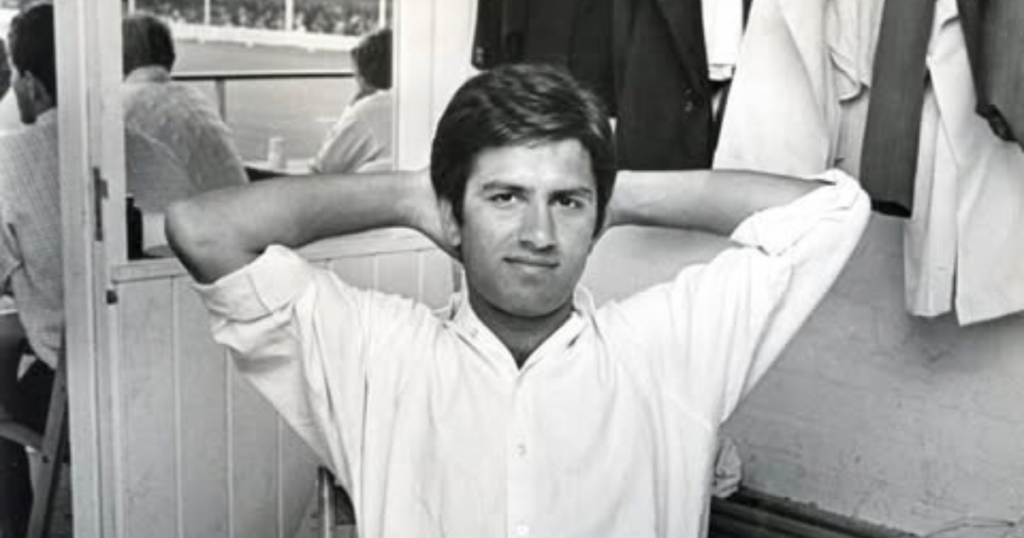
Dr Arun Midha explores how an afternoon in Swansea brought together two men from Lahore whose very different journeys through Partition, medicine and cricket became part of the story of modern Wales.
On 28 September (today!) Majid Khan is 80. For many people in Wales, particularly those who remember the great days of Glamorgan cricket, this birthday will bring back memories of an extraordinary cricketer. Majid was a Pakistan international, Glamorgan captain and an elegant, attacking batsman who became one of the county’s most admired players. For me, though, his 80th birthday brings back a rather different memory. Majid Khan once came to our family home in Gowerton for tea. I was about fourteen at the time, in the mid-1970s, and I stayed for perhaps an hour before leaving to watch Swansea City play the mighty Spurs in a cup game. I have often thought about that since. What was I thinking? A football match rather than spending more time with Majid Khan! At fourteen, of course, it seemed perfectly reasonable. Fifty years later, it seems rather less so, and I have to admit that I regret leaving.
They brought their histories with them, but those histories became part of something new.
It is funny what memory does. What seemed like an ordinary afternoon at the time has acquired a significance that I could never have imagined. Majid’s 80th birthday has brought it back to me because that visit was about much more than a famous cricketer coming to our home. It brought together two men whose lives had begun in South Asia and had been profoundly shaped by the upheavals of the twentieth century.
Innovative. Informed. Independent.
Your support can help us make Wales better.
My father, Dr Rajendra Midha, was an Indian Hindu who was brought up in Lahore and came to Britain as a young doctor, eventually making his home in Wales. Majid was a Pakistani Muslim, born in 1946 and also brought up in Lahore. Both men had lived through Partition, although their lives subsequently took very different directions. When Majid was born, India was still under British rule. Within a year, the Punjab would be divided, Pakistan and India would emerge as new countries, and millions of people would be displaced. For that generation, Partition was not simply an event in a history book. It was something that touched families, friendships, homes and identities, and its consequences stayed with people for the rest of their lives.
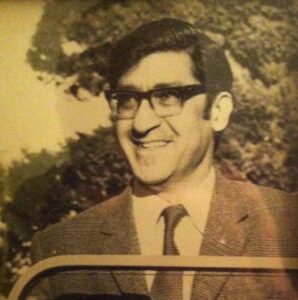
That makes the memory of the two men sitting together in our home all the more striking to me now. An Indian Hindu doctor and a Pakistani Muslim cricketer, both brought up in Lahore, had found themselves in Wales less than thirty years after the division of the country in which they had been born. What I do know is that their connection was more than a shared South Asian background. My father’s role was very different from Majid’s, but their lives had become linked through Glamorgan County Cricket Club. My father had come to Wales to practise medicine and became part of the NHS. He later became Honorary Medical Officer to Glamorgan. Majid, meanwhile, had become a Glamorgan great.
Majid’s cricketing record helps explain why he became such a significant figure in Welsh cricket. He joined Glamorgan in 1968 after his extraordinary performance playing for Pakistan against the county at Swansea the previous year, when he scored 147 in just 89 minutes, hitting 13 sixes, including five in one over. He went on to spend nine seasons with Glamorgan, scoring 9,610 first-class runs and 21 centuries, and captaining the county from 1973. He was part of the Glamorgan side that won the County Championship in 1969. For Pakistan he played 63 Tests, scoring 3,931 runs and eight centuries. Those figures tell us something about the quality of the player, but they do not fully explain the affection with which he was regarded in Wales. Majid became woven into the story of Glamorgan cricket itself, rather than simply passing through as an international player. In 1970, speaking about his time with the county, he said:
‘I have been extremely happy with Glamorgan, who are a friendly side. The Welsh people I have found to be marvellously hospitable’.
Majid and Raj’s histories had been separated by the creation of India and Pakistan, yet their lives had converged through Glamorgan cricket and, for one afternoon at least, in a Welsh/Asian family home.
My father’s experience of Wales was different again. He came here as a young Indian doctor, married my Welsh mother, Olive, who was a Nurse, established a GP practice in Blaen-y-Maes, Swansea and spent much of his life serving the community. He also experienced prejudice, as did many people who came to Britain from the Commonwealth during those years. Yet he stayed and built a life here. His career eventually included becoming a Fellow of the Royal College of General Practitioners, a Police Surgeon, a Prison Doctor, a Justice of the Peace and Honorary Medical Officer to Glamorgan County Cricket Club. His connection with the club therefore gave him a very different relationship with Majid from that of a cricket supporter. One led the county on the field, the other looked after those who played it.
There is another small connection between our families that I only find striking with the benefit of hindsight. Majid’s father, Dr Jahangir Khan, had studied and played cricket at Cambridge in the 1930s. Majid later went to Emmanuel College, Cambridge, from 1969 to 1972. A few years later, my brother Paul went to the same college. They did not overlap, but I like the coincidence: two families whose histories had been shaped in very different ways by India and Pakistan, yet with another small thread connecting them through Cambridge. I cannot pretend that I was thinking about any of this at the time. Indeed, given that I had already demonstrated my priorities by leaving Majid Khan to go and watch Spurs, I suspect I was not thinking about much at all.
Looking back now, I find something rather moving about that connection. Majid and Raj’s histories had been separated by the creation of India and Pakistan, yet their lives had converged through Glamorgan cricket and, for one afternoon at least, in a Welsh/Asian family home.
Perhaps that is why the distinction between hospitality and belonging has become increasingly important to me. Majid described the Welsh people as ‘marvellously hospitable’, and there is something generous and warm in that description. For someone arriving in a new country, being welcomed matters enormously. But hospitality also suggests that the person being welcomed is, at least initially, a guest. Belonging is something deeper. It means that after enough time, contribution, friendship and shared experience, the distinction between the person who arrived and the people who were already here begins to lose its importance. My father did not cease to be Indian or Hindu when he became Welsh, any more than Majid ceased to be Pakistani or Muslim when he became part of Glamorgan and the wider life of Wales. They brought their histories with them, but those histories became part of something new.
It should mean having the opportunity to participate, contribute and eventually see yourself reflected in the story of the country in which you live.
That seems particularly relevant when we look at Wales today. The 2021 Census recorded almost 89,000 people in Wales identifying as Asian, Asian Welsh or Asian British. Among them were more than 21,000 people identifying as Indian and 18,000 as Pakistani. These figures are not simply statistics about migration. They describe people who have settled, worked, raised families and become part of Welsh communities, and increasingly they describe generations of people who were born here. The Wales of today is therefore not simply a country that has welcomed people from elsewhere, it is a country whose own story has been changed by the people who came here. That change can be seen in the NHS, in schools and universities, in businesses and community organisations, and in our sporting life. It is part of the ordinary fabric of Wales.
Robust debate and agenda-setting research.
Support Wales’ leading independent think tank.
My father used to say that belonging was defined not by ancestry but by service. I have thought about that a great deal since he died in 1983, because it seems to offer a useful way of thinking about Welsh identity. An inclusive Wales should not require people to abandon the histories, faiths or cultures that they brought with them. Nor should inclusion simply mean being present and being tolerated. It should mean having the opportunity to participate, contribute and eventually see yourself reflected in the story of the country in which you live. The question is not simply how many people have arrived from India, Pakistan or elsewhere, but what happened after they arrived. They became doctors and nurses, teachers and engineers, shopkeepers and academics; they raised children, joined clubs and charities, built businesses and formed friendships. Some encountered prejudice and discrimination along the way, and it would be wrong to romanticise that history. But they also helped to create the Wales that exists today.
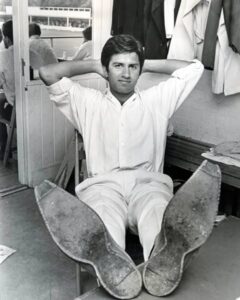
That is why I think Majid’s story is about more than cricket. Sport provides a particularly powerful way of seeing how belonging can develop because the relationship is so often mutual. Majid came to Glamorgan from Pakistan and gave the county his talent, his runs and eventually his leadership. Wales gave him a place where he became a much-loved part of the sporting life of the country. My father came from India to work in medicine and gave decades of service to the communities in which he lived. Wales, in turn, became his home. Neither man was required to become somebody else. Their identities remained part of who they were, but they acquired another identity too. They became part of Wales.
We sometimes talk about migration as though it is a single moment: somebody arrives from somewhere else and begins a new life. In reality, it is a much longer process. People arrive, settle, form relationships, raise families and put down roots. Their children and grandchildren grow up with more than one history behind them. At some point, the question of when they stop being ‘new’ becomes almost impossible to answer. Majid arrived in Wales more than half a century ago. My father arrived even earlier. Their lives are now part of the history. So are the lives of the generations that followed them. That is why I think an inclusive Welsh identity should be confident enough to accommodate these different histories rather than treating them as something external to Wales.
There is, of course, a wider political question here. We live at a time when arguments about migration, identity and belonging can become deeply polarised, and there are legitimate debates about housing, public services, employment and the pressures facing communities. But there is also a danger in reducing migration to numbers, pressures and problems. People are more than statistics. They have stories, relationships and contributions, and over time those contributions become part of the places in which they live. The story of my father and Majid is only one small example, but it captures something important about modern Wales: the people who came here did not simply change Wales, any more than Wales simply absorbed them unchanged. Both sides were altered by the encounter.
Discussions and debates that drive Wales forward.
Join Wales’ leading independent think tank.
I still wish I had stayed that afternoon. Not simply because I missed the opportunity to spend more time with Majid Khan, although I certainly wish I had. I wish I had stayed because, without knowing it, I was sitting close to a small piece of the story of modern Wales: an Indian Hindu doctor who had been brought up in Lahore; a Pakistani Muslim cricketer who had also been brought up in Lahore, two men whose lives had been shaped by Partition; a Welsh family home; and a Welsh cricket club.
Fifty years later, I understand rather better what I failed to see that day. Majid Khan was not simply visiting Wales. He had already become part of its story. Perhaps that is what belonging really means: not that people forget where they came from, and not that difference disappears, but that the stories they brought with them eventually become part of the story we share. I just wish I had realised it before I left to watch the mighty Spurs.
All articles published on the welsh agenda are subject to IWA’s disclaimer. If you want to support our work tackling Wales’ key challenges, consider becoming a member.