
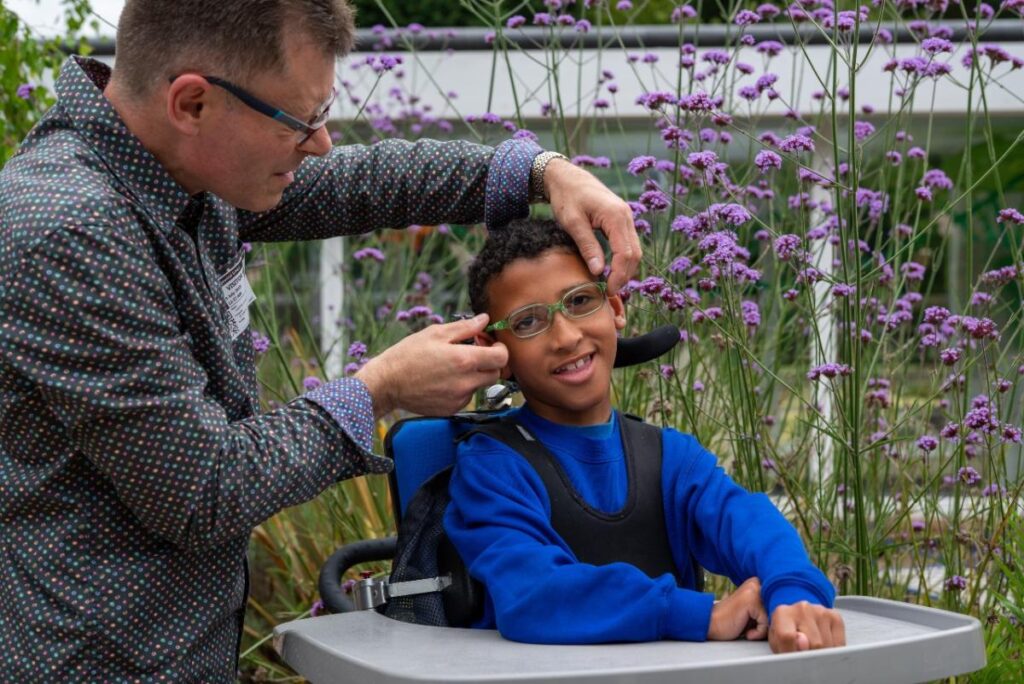
Edward Oloidi looks at why eye-care services need to be designed to be inclusive of people with learning disabilities in Wales
For most people, an eye test is a routine healthcare appointment. For many adults with learning disabilities in Wales, however, accessing basic eye care can be far from straightforward. What should be a simple preventative service often becomes a complicated journey through unclear pathways, inaccessible environments, and services that are not always designed with their needs in mind.
This matters because sight problems are far more common among people with learning disabilities than in the wider population. Across the UK, around two million people live with sight loss, with over four in ten children in special educational needs schools and around six in ten adults with learning disabilities requiring glasses. Adults with learning disabilities are up to ten times more likely to experience serious vision problems.
One in eight people felt they were treated less favourably during a sight test due to their disability.
Despite strong policy commitments from the Welsh Government such as the Learning Disability Strategic Action Plan (2022–2026) and the Well-being of Future Generations Act (2015) prioritising the eradication of health inequalities, a persistent ‘implementation gap’ remains between policy ambition and everyday lived experience. Nowhere is this more evident than in the eye care journey, where individuals with learning disabilities frequently become ‘stuck’ when attempting to access community-based optometry services.
The context of inequality
Timely eye care can transform quality of life for people with learning disabilities. Improved vision can enhance communication, independence, mobility, and social participation, while also reducing behavioural distress that may arise from undiagnosed vision problems. For families and carers, early detection of eye conditions can significantly reduce anxiety and prevent avoidable health deterioration.
Welsh health policy strongly emphasises community-based, person-centred care. In theory, optometry services delivered through local practices should provide accessible, preventative support close to home. However, national evidence suggests that these ambitions are not always realised in practice.
A recent survey conducted by the General Optical Council found that one in eight people felt they were treated less favourably during a sight test due to their disability. The same research suggests that people with disabilities are less likely to identify optometry services as their first point of contact for eye problems. Instead, they often turn to walk-in clinics or hospital services, which may not provide the continuity of care needed to identify longer-term vision needs. Several factors contribute to this pattern. Concerns about appointment availability, uncertainty around NHS funding, and confusion about potential costs can discourage engagement with optometry services. For people with learning disabilities who may rely on carers, support workers, or family members to arrange appointments – these uncertainties can create additional barriers to accessing care.
Systemic barriers to civic inclusion
Our initial scoping review, conducted as part of an ongoing pilot study in Wales, highlights a complex set of structural challenges that influence whether people with learning disabilities are able to access appropriate eye care services.
Another issue is diagnostic overshadowing, a well-documented phenomenon in healthcare where physical symptoms are mistakenly attributed to an individual’s learning disability rather than investigated as potential medical concerns.
One of the most immediate barriers relates to physical accessibility and financial uncertainty. Some community optometry practices remain difficult to navigate for people who use wheelchairs or mobility aids. At the same time, there is often confusion around eligibility for NHS optical vouchers and the extent of financial support available. Because learning disability is not currently recognised as an automatic entitlement category for NHS-funded eye care, some individuals worry about unexpected costs and may avoid seeking care altogether.
Workforce knowledge and confidence also plays an important role. While many optometrists provide excellent support to patients with additional needs, some practitioners report limited familiarity with easy-read materials or adapted vision testing methods. Others assume that examining someone with a learning disability requires highly specialised expertise or significantly longer consultation times. In busy practices, this can create uncertainty about whether adequate support can be provided.
Another issue is diagnostic overshadowing, a well-documented phenomenon in healthcare where physical symptoms are mistakenly attributed to an individual’s learning disability rather than investigated as potential medical concerns. In the context of eye health, behavioural changes such as agitation, withdrawal, or reduced engagement may be interpreted as part of a person’s disability rather than possible indicators of deteriorating vision. The result can be delayed diagnosis and avoidable decline in wellbeing.
Innovative. Informed. Independent.
Your support can help us make Wales better.
Toward an inclusive eye care pathway
The barriers encountered in optometry services reflect wider health inequalities experienced by people with learning disabilities across the healthcare system. Addressing these challenges therefore requires more than individual adjustments within clinical practice. It calls for a broader shift towards designing services that are inclusive by default.
One promising approach is the development of a structured, specialist ‘Easy Eye Care’ pathway embedded within mainstream community services. Rather than creating a separate specialist system, this model focuses on adapting existing services so that they are accessible to a wider range of patients. Such an approach emphasises practical adjustments that can significantly improve accessibility. These include the routine use of easy-read information materials and visual aids to explain the purpose of eye examinations, as well as adapted testing tools that do not rely on literacy or verbal communication. Longer appointment times may also be necessary for some patients, allowing practitioners to build trust and ensure that examinations are conducted thoroughly.
Training and awareness are equally important. Support workers, carers, and healthcare professionals often play a crucial role in recognising early signs of vision problems. Increasing awareness of visual health within social care and community support services could help ensure that potential issues are identified earlier and that individuals are supported to access appropriate care.
Policy implications for Wales
Addressing these challenges requires coordinated action across policy, commissioning, and professional practice. Wales already has a strong policy framework for tackling health inequalities, but the experience of people with learning disabilities accessing eye care suggests that greater attention must be paid to implementation.
For policymakers and health boards, there is a clear opportunity to strengthen primary eye care pathways so that they consistently accommodate the needs of people with learning disabilities. Introducing a nationally recognised Easy Eye Care pathway within community optometry services could provide clarity for practitioners and commissioners alike, while ensuring that reasonable adjustments, such as longer appointments and accessible communication materials, are built into service design.
At the same time, clearer guidance around NHS optical support would help reduce uncertainty for patients and carers. Expanding eligibility criteria or providing more transparent information about financial support could encourage earlier engagement with routine eye care.
For policymakers and health boards, there is a clear opportunity to strengthen primary eye care pathways so that they consistently accommodate the needs of people with learning disabilities.
Workforce development will also be essential. Incorporating learning disability inclusive practice into professional training programmes for optometrists and dispensing opticians would help build confidence across the profession. Alongside this, wider awareness campaigns aimed at carers and support workers could ensure that early signs of visual impairment are recognised and addressed.
Ultimately, improving access to eye care is not simply a clinical issue; it is a matter of health equity and civic inclusion.
Robust debate and agenda-setting research.
Support Wales’ leading independent think tank.
Conclusion: A call for co-production
Collaborative work between the Unit for Development in Intellectual and Developmental Disabilities (UDIDD) at the University of South Wales, the Centre for Vision Services Research at Cardiff University, Optometry Wales, SeeAbility, Health and Care Research Wales, and other partners is exploring how more inclusive eye care pathways can be developed across Wales. By bringing together the lived experiences of people with learning disabilities, the perspectives of practitioners, and the priorities of policymakers, the project aims to identify practical solutions that can be implemented across the health system. This work aligns closely with Welsh Government priorities outlined in A Healthier Wales, Our Future Approach for Optometry Services, and the Anti-racist Wales Action Plan. It also reflects the Centre for Vision Services Research’s commitment to Equity, Diversity, and Inclusion (EDI), and to improving Public Information and Education about eye health.
To achieve genuine health equity in Wales, eye health information and services must be accessible to all, regardless of cognitive or communication needs. Delivering ‘high-quality services close to home’ is essential for reducing avoidable sight loss and fulfilling the promise of a fairer healthcare system – one that truly includes people with learning disabilities.
The challenge is not a lack of policy ambition. It is ensuring that those ambitions translate into everyday experiences of care that are inclusive, accessible, and responsive to the needs of all communities.
Note: This article translates findings from the scoping review component of our ongoing pilot study into a policy-focused narrative, highlighting the intersection of health inequality, public policy, and the barriers people with learning disabilities face when accessing basic eye care in Wales.
Study Team: Rebecca Nicholls is a Postdoctoral Research Assistant at the University of South Wales; Carolyn Wallace is Professor of Innovation and Engagement at the University of South Wales; and Barbara Ryan is Professor of Optometric Practice at Cardiff University.
All articles published on the welsh agenda are subject to IWA’s disclaimer. If you want to support our work tackling Wales’ key challenges, consider becoming a member.