Billie-Jade Thomas outlines why reintroducing a badger cull would be the wrong choice for the new Welsh Government
While it is still very much early days for the new Plaid Cymru minority government and the expanded Senedd, tackling Bovine TB (bTB) has already been raised in Plenary on several occasions, by parties for and against badger culling. The RSPCA has identified the potential introduction of a badger cull as one of the biggest threats to animals in Wales in the coming years, with Plaid Cymru having included references to ‘wildlife control’ in dealing with bTB in their election manifesto.
While we understand – and agree – that effectively managing bTB can have a significant impact on improving farmers’ mental health and wellbeing, as well as the health and welfare of their cattle, we remain firmly opposed to badger culling as the solution. This is based on both scientific and animal welfare evidence.
Robust debate and agenda-setting research.
Support Wales’ leading independent think tank.
People in Wales feel strongly about badgers
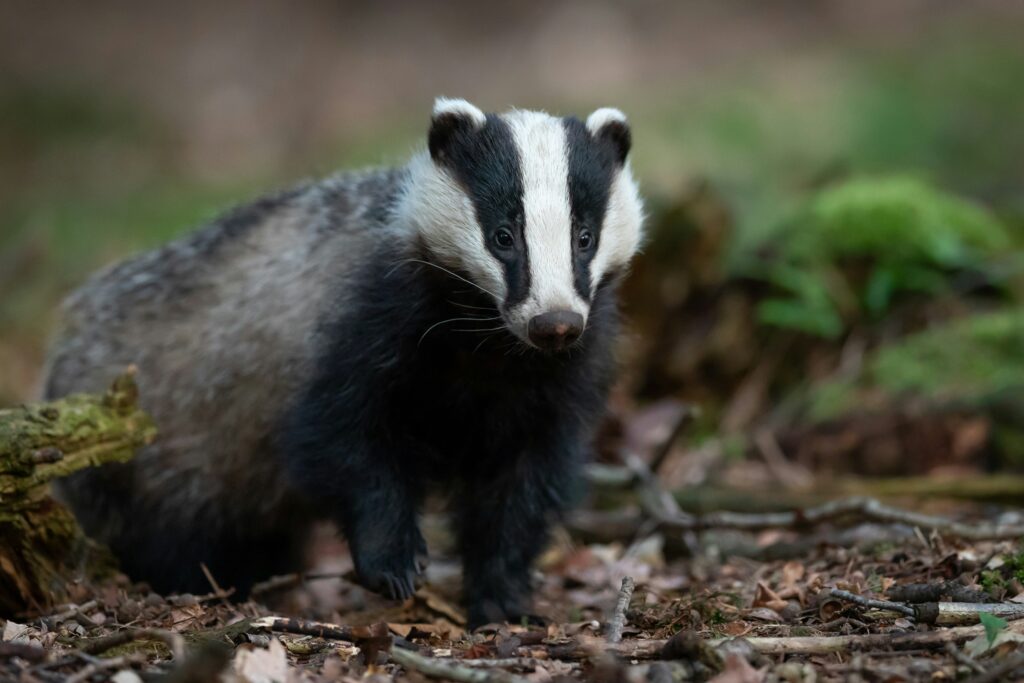
Badgers are a protected species by law, and are considered one of our most iconic and popular species of native wildlife. Recent polling undertaken by Savanta on behalf of the RSPCA backs this sentiment, with 73% of people in Wales selecting badgers as one of the species they are most concerned about when given a variety to choose from. Furthermore, more than half of those polled (54%) recognised them as ‘iconic British mammals’ when asked what associations they have with badgers, with 43% considering them ‘heavily misunderstood’. Notably, only one in five (20%)* consider them to be ‘disease spreaders’.
Progress is being made in Wales without culling
As it stands, almost 95% of herds in Wales are currently free from bTB, under a 14 year programme which focused on reducing cattle-cattle transmission as opposed to culling badgers.
Badger culling has been happening in England intensively every year since 2013, which has resulted in over 247,000 badgers being killed as part of its disease prevention programme. However, there is still no scientific consensus that the culling of badgers has been effective in reducing bTB in cattle in England, with the disease still prevalent across the border. While some stakeholders continue to believe that badgers play a major role in the spread of bTB, the science is now clear and there is consensus that this is incorrect. It is now widely recognised that the majority of bTB is transmitted between cattle, with a growing body of robust scientific evidence showing that the majority of infection occurs within and between herds. This was also acknowledged in the UK Government’s new strategy for England which was published on the 10th of June which recommends stricter measures to prevent cattle-cattle infections.
Badger culling has not been used by the Welsh Government since 2012. Still, new herd incidents of bTB in Wales have declined by over 40% since 2010, due, in part, to the various measures put in place over the last decade to limit transfer of the disease between infected cattle. According to the latest quarterly data, herd prevalence is currently at its lowest value since January 2017. New data published on the 17th of June shows a decrease of 23% in relation to new herd instances in Wales covering the 12 months to March 2026. Meanwhile, the number of animals slaughtered also decreased by 21% over the same period. As it stands, almost 95% of herds in Wales are currently free from bTB, under a 14 year programme which focused on reducing cattle-cattle transmission as opposed to culling badgers. While demonstrable progress has been – and is being – made, we agree that more could be done to accelerate Wales’ ambition to be Officially TB Free (OTF). As such, we are calling for farmers to be better supported by the new Welsh Government to take more cost-effective measures such as improved testing – for routine surveillance, as well as pre and post-movement, restricted herd movement, safer trading and enhanced farm biosecurity.
For many years, Wales has shown its ability to use devolved levers to be a leader in animal welfare
More than half of England’s last estimated badger population was culled in England between 2013 and 2025, with figures from Defra demonstrating that costs associated with culling cost the public purse more than £23.7 million between 2014-2024. Despite this, bTB persists across the border. Due to the failure of badger culling to control the disease, the UK Government confirmed its intention to move away from culling in 2024, and we have since seen an end to 13 years of intensive culling. The UK Government’s change in policy is in line with fulfilling its ambition for England to be Officially TB Free (OTF) by 2038. This in itself signals an acknowledgement that lethal badger control is not needed to achieve bTB eradication.
We need to learn from the UK Government’s mistakes
With Wales being home to around 61,000 badgers, if the Welsh Government undertakes a similar trajectory to England’s previous approach in the coming years, thousands of these animals will be killed. However, it is likely that bTB will continue to persist, if we are to learn anything from England’s experience.
For many years, Wales has shown its ability to use devolved levers to be a leader in animal welfare, with us being the first UK country to pass legislation to ban greyhound racing, end the use of snares and glue traps, and ban the use shock collars for dogs and cats back in 2010. It would therefore be devastating to see the new Welsh Government use devolved powers for another purpose – and resort to the use of unethical, inhumane and unscientific methods such as badger culling. According to the aforementioned polling, significantly more people in Wales are against badger culling (46%) than support it (27%). Almost two thirds (63%) of those asked stated that they were either ‘very’ or ‘somewhat’ uncomfortable with badger culling being conducted in Wales using lethal methods approved by government authorities. When asked how comfortable they would be with taxpayers’ money being used towards culling badgers, 68% indicated that they would either be ‘very’ or ‘somewhat’ uncomfortable with this.
Plaid’s popular vote total in the recent Senedd election was the highest for any party in Welsh devolution’s history – but a move in favour of badger culling would likely be anything but popular with the majority of people in Wales.
Innovative. Informed. Independent.
Your support can help us make Wales better.
Culling is cruel, ineffective, and inhumane
Non-selective culling involves either trapping badgers in cages before shooting them, or the ‘controlled shooting’ of free-roaming badgers at night. While both methods present animal welfare problems such as disruption to local badger populations, the latter is considered particularly inhumane, as it has the potential to cause slow and painful deaths by injuring badgers as opposed to killing them outright, potentially leaving them with bullet wounds, blood loss and organ failure. An independent review commissioned by the UK Government in 2014 concluded that between 7.4% – 22.8% of badgers shot using this method during the initial pilot culls in England were still alive after five minutes. When told what badger culling involves, 70% of the people we surveyed indicated that they would be more likely to oppose the method.
Wales’ Bovine TB experts have not endorsed culling
Any changes in Wales’ policy on controlling bTB that involves badger culling have the potential to lead to thousands of animals being killed unnecessarily, without eradicating the disease.
As well as being concerning from an animal welfare and scientific perspective, Plaid’s relevant manifesto commitment also failed to properly respect the roles of Bovine TB Technical Advisory Group (TAG) for Wales and the Bovine TB Eradication Programme Board. These are both responsible for providing the strategic advice to the Welsh Government relevant to bTB. However neither has advocated for, or recommended, the use of badger culling to date. It was encouraging to hear the new Cabinet Minister for Rural Resilience and Sustainability, Llŷr Gruffydd MS, acknowledge the research that the Board and TAG are undertaking and considering in relation to wildlife and bTB and relay the importance of allowing this work to be completed before any decisions are made. Notably, a recently released paper emphasises the importance of the TAG and Board remaining strictly independent of political influence, regardless of its acknowledgment that Wales may miss its target to be bTB free by 2040.
Discussions and debates that drive Wales forward.
Join Wales’ leading independent think tank.
Politically speaking, 52% of people in Wales stated that they would be less likely to support a party which endorses badger culling when asked during our polling, which means that the direction taken by the new Welsh Government could impact the ongoing support they receive from the public in Wales over the next four years.
Any changes in Wales’ policy on controlling bTB that involves badger culling have the potential to lead to thousands of animals being killed unnecessarily, without eradicating the disease. It is therefore critical that the new Welsh Government’s approach towards tackling bTB is evidence-based, learns lessons from other countries and uses robust scientific data, as opposed to being based on perception and confirmation bias. As scientific experts in both farmed and wild animal welfare, we stand ready to support Wales’ ambition to be OTF, but in a way which does not needlessly pose a threat to one of our most distinctive yet misunderstood species of wildlife.
All figures, unless otherwise stated, were conducted for the RSCPA by Savanta. The total sample size was 1,033 residents living in Wales. Fieldwork was undertaken between 24 April and 12 May 2026. The survey was carried out online. The figures have been weighted and are representative of all Wales adults (aged 18+).
All articles published on the welsh agenda are subject to IWA’s disclaimer. If you want to support our work tackling Wales’ key challenges, consider becoming a member.