
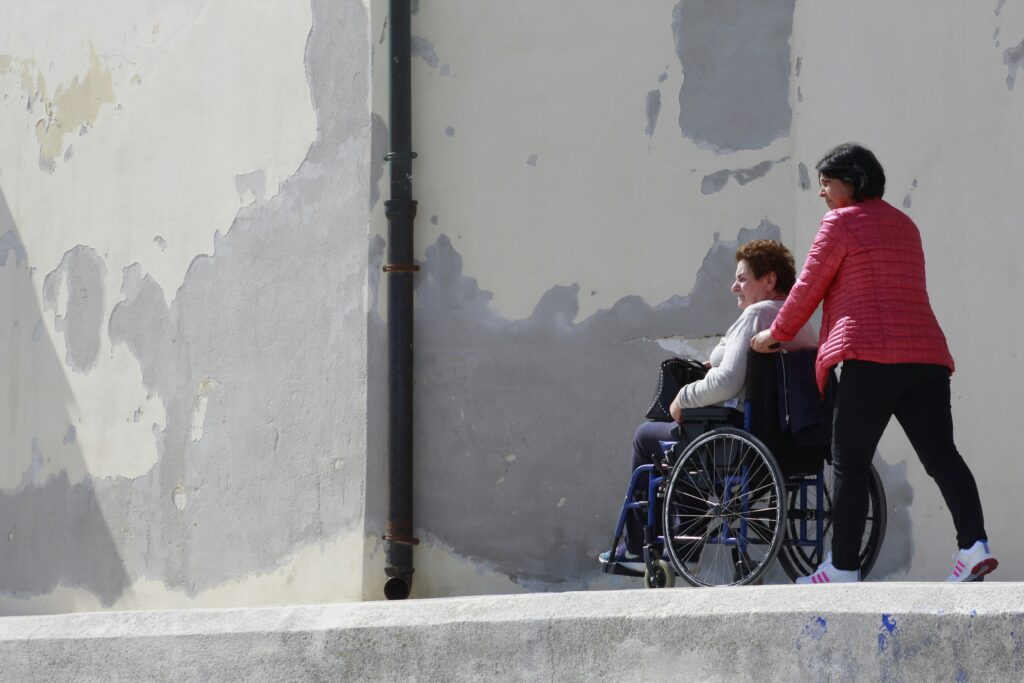
Jake Smith considers the kind of support that unpaid carers need to carry on keeping their loved ones safe and cared-for while saving public services billions of pounds.
In Wales our NHS and social care system is sustained by hundreds of thousands of our fellow citizens who provide unpaid care to their loved ones. The 2021 census found that there are 310,000 unpaid carers in Wales providing care and support to family members or friends who could not manage without them due to age, illness or disability. Modelling by Carers Wales suggests this figure is likely to be higher – at nearly 500,000. Over 100,000 people provide unpaid care for more than 50 hours a week, exceeding the hours of a full-time job for which someone would be paid a salary.
Analysis by the University of Sheffield and Carers UK found that the cost to Wales of replacing the care provided by unpaid carers would be over £10bn every year. This is broadly equivalent to the Welsh Government’s annual spending on the NHS. In each of Wales’ new 16 super-constituencies, the value of unpaid carers is estimated to be in the hundreds of millions per year. Unpaid carers are the foundation of health and care in Wales. Despite the huge debt Wales owes to carers, the poverty rate among unpaid carers is 30% higher than for those who do not provide unpaid care. Carers are also in worse physical health than the non-caring population. Around two thirds (64%) of unpaid carers told us they had no choice but to become a carer due to a lack of available services for their loved one.
Analysis by the University of Sheffield and Carers UK found that the cost to Wales of replacing the care provided by unpaid carers would be over £10bn every year.
Since 2016, everyone with unpaid caring responsibilities has had rights in Wales under the Social Services and Well-being (Wales) Act 2014. This piece of legislation places important duties on councils to proactively provide information, advice and assistance to unpaid carers, and offer them a formal assessment of their support needs. Despite this positive legislative framework, many carers are unaware of the support available. Research has found that less than 4 in 10 unpaid carers are identified as being unpaid carers within a year of their caring role commencing, and the majority of carers have not seen any information, or received any advice, on providing care.
The social care system in Wales, as across the UK, is under immense pressure and can be notoriously difficult to navigate even at the best of times. As the national membership charity for unpaid carers, we have been working to train and inform social workers across Wales to help them to provide the best possible support to unpaid carers through the Welsh Government-funded Carer Aware project.
From the outset, we knew our project needed to be meaningfully co-produced with the lived experience of both unpaid carers and the social workers at the front line of the social services system. We brought social workers and carers together to discuss their different perspectives and experiences navigating shared interactions and services. This led to carers and social workers agreeing a number of good practice principles that we have been promoting to the social work profession through the project.
Robust debate and agenda-setting research.
Support Wales’ leading independent think tank.
Carers and social workers agreed that all the key elements of Carers Needs Assessments must be delivered consistently, with professionals making sure they ask carers whether they are “willing and able” to undertake caring tasks. This is an important principle in the legislation designed to give carers choice and control. It was also felt that social workers should recognise that a carer’s role can fluctuate over time and show they acknowledge and respect the valuable expertise a carer will have built up over years or even decades of caring.
Social workers do vital work signposting to services and other types of support, so we have also been encouraging professionals to consider how they can then take the first practical step with a carer, such as by helping them to start an application for a grant or by making an introduction to a support group. Social workers often wish they had the resources to provide more support to families, and they can feel like they are often delivering bad news to carers. We encourage professionals to be as open and transparent with carers as possible about how decisions are made, so even if requested support cannot be provided, carers feel fully informed and empowered with a greater understanding of the system.
We have delivered training sessions to around 900 social workers across all 22 local authority areas in Wales. We have produced a range of resources – from guides to videos – for both social work staff and carers, and we have shared good practice across the sector through staff forums to seminars for leaders of social services. The project continues to evolve, and we are now looking towards more online training resources to maximize accessibility for professionals across Wales. Co-produced with both professionals and carers, and backed up by our long-standing expertise as a charity in carer research and policy, we believe the project has contributed a level of innovation in social work in Wales to help to enhance the interactions between social work professionals and unpaid carers.
Unpaid carers need practical, financial and emotional support to carry on keeping their loved ones safe and cared-for while saving public services from billions of pounds of avoidable pressures.
In the decade since unpaid carers in Wales gained new legal rights, a number of steps have been taken to try and connect more carers to support. In 2021 the Welsh Government’s Carers Strategy sought to co-ordinate actions across overarching themes, including identifying and valuing unpaid carers, to balancing the pressures of caring with employment and education. The national Short Breaks Scheme has offered short breaks to thousands of carers and the Carers Support Fund has provided financial assistance to many carers in financial distress. Unfortunately, there is significant evidence to suggest that too few carers are receiving the support that they are owed under the Act, and many face immense frustration navigating systems that should be responsive to them.
Discussions and debates that drive Wales forward.
Join Wales’ leading independent think tank.
After investigating four councils in Wales, the Public Services Ombudsman reported that just 2.8% of carers had received an assessment of their needs in these areas. An even lower proportion of carers were receiving a support plan following an assessment. Turning to the NHS, our research has found the majority of carers do not feel listened to or consulted when their loved one is being discharged from hospital, despite health boards often relying on unpaid carers to play a major role in looking after recently discharged patients. Without adequate support for unpaid carers, discharges home from hospital can be unsustainable and, in some cases, unsafe.
Unpaid carers need practical, financial and emotional support to carry on keeping their loved ones safe and cared-for while saving public services from billions of pounds of avoidable pressures. Professionals must be equipped to build effective, trusting and productive relationships with the unpaid carers they interact with. In order to relieve pressure on the NHS, re-enforce our social care system, tackle poverty and support people to be able to stay in employment, meaningful improvements for Wales’ unpaid carers must be top of mind for leaders in the NHS, local government, and in the next Senedd. From the front line of local services to the highest levels of political decision making, we will continue to make sure carers voices are heard.
All articles published on the welsh agenda are subject to IWA’s disclaimer. If you want to support our work tackling Wales’ key challenges, consider becoming a member.