Dr Hade Turkmen from Oxfam Cymru discusses the rising conflicts in the Middle East and calls for Cymru to stand firmly against the expansion of war and the collapse of the rules that protect civilians everywhere.
The Middle East has been pushed into a dangerous new phase. The unlawful attack on Iran by Israel and the United States on 28 February, and Iran’s response, has pushed a region already on the brink into even deeper crisis and an ever-expanding arc of violence. Homes have been obliterated, children are being killed, the death toll climbs relentlessly, and millions are once again on the move — displaced into uncertainty, trapped under the widening shadow of a war they did not choose.
Families already traumatised by conflicts, bombardment and multiple displacements now face renewed upheaval, collapsing local economies and deepening poverty. Women and children are bearing the heaviest burden. A region already in humanitarian freefall is being dragged into even greater instability.
These latest attacks, carried out even as diplomatic engagement over Iran’s nuclear programme continues, have pushed an already fragile landscape closer to full-scale war in the region. Under Article 2(4) of the UN Charter, the use of force against the territorial integrity of another state is prohibited except in the narrowest circumstances. Without credible self-defence or international authorisation, such strikes constitute a grave breach of international law.
But this escalation did not begin with the attack on Iran. It is the predictable outcome of years of impunity and the steady dismantling of international law — nowhere more painfully visible than in Gaza.
As always, civilians are the ones paying the price. This violence must stop.
For more than two years, the world has watched a genocide unfold in real time. Entire neighbourhoods have been erased. Tens of thousands of civilians have been killed. More than two million people have been pushed to the edge of famine under siege conditions. Today, Gaza’s humanitarian crisis is worsening yet again. Borders remain only partially open, aid access is sporadic at best, and food markets have collapsed under the relentless pressure of siege, insecurity and economic devastation. Families who have endured bombardment, starvation and repeated displacement now face the renewed terror of a rapidly widening war.
Innovative. Informed. Independent.
Your support can help us make Wales better.
In the West Bank, a surge in settler violence and intensified movement restrictions is impacting Palestinian communities. Rural areas have faced repeated intimidation by armed settlers, with shortages of essential goods worsening. The installation and closure of key gates and checkpoints is further fragmenting communities and restricting access. Humanitarian organisations have been forced to put operations largely on hold.
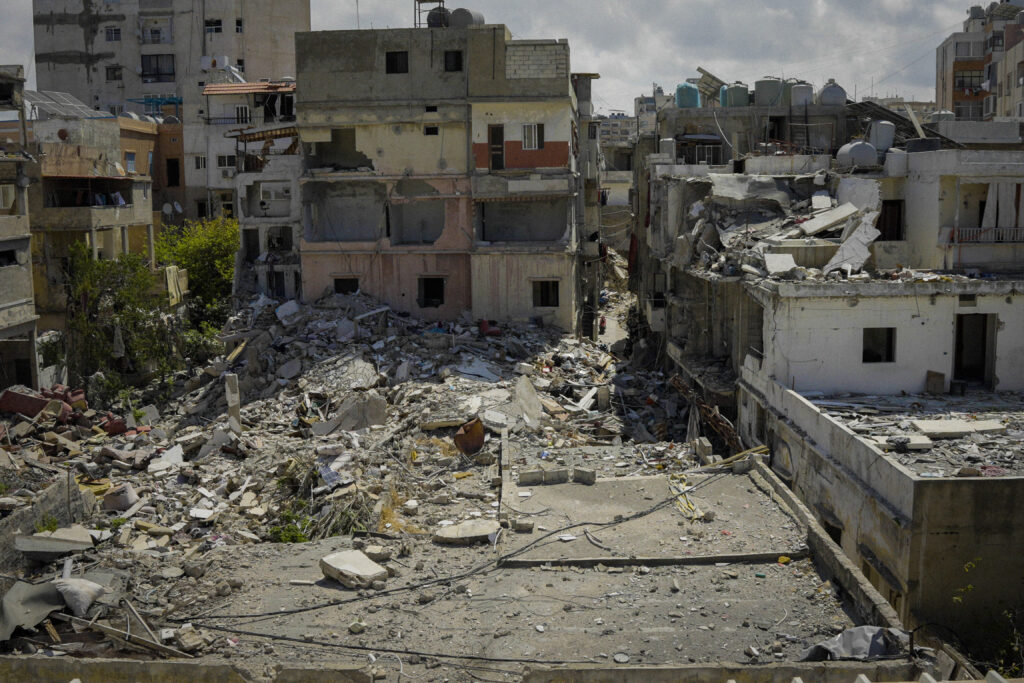
That widening war is now engulfing neighbouring countries. In Lebanon, a country already overwhelmed by overlapping economic, political and social crises, more than 822,600 people have been forcibly displaced. This is more than the combined population of Cardiff, Swansea and Newport – Cymru’s three largest cities.
Among those fleeing are refugees from Syria and Palestine who are now uprooted yet again, with no resources to fall back on. Airstrikes have killed hundreds and injured countless more. Hospitals, some of which have been attacked by Israel, are buckling under the volume of casualties. Shelters and humanitarian services are stretched far beyond capacity as displacement rises and urgent needs multiply.
As always, civilians are the ones paying the price.
This violence must stop.
Global shockwaves strike local lives
The escalation of violence is more than a humanitarian catastrophe; it is also reshaping the global economy. Insecurity around key maritime routes, including the Strait of Hormuz and Bab al Mandab, has already sent shockwaves through energy markets. Rising oil prices, disrupted supply chains and soaring shipping costs will drive inflation across the world. As always, low-income households will be hit first and hardest — including here in Cymru.
Calling for peace means creating the conditions for communities to plan, grow and flourish — without fearing whether they can heat their homes or put food on the table.
On 11 March, Senedd Members raised urgent questions about how Cymru will secure essential supplies such as oil, food and fertilisers. It is no small concern: around 25–35% of global fertiliser passes through the Strait of Hormuz — now closed by the war — and Welsh farmers rely heavily on fertilisers sourced through this route.
These moments recall the early days of the pandemic. COVID-19 exposed our deep dependence on global supply chains for even the most basic needs. Yet the lesson was not fully learned. While ordinary people adapted to a “new normal”, the economy quietly reverted to the old one. No structural shift was made towards genuine resilience — towards local production of essential food, secure renewable energy, or a more self-sufficient economic model rooted in social and climate justice.
Cymru must build an economy rooted in resilience and global responsibility: strong local supply chains, clean and secure renewable energy, and food systems that can withstand global turbulence. That is not isolationism — it is responsibility. And Cymru can lead by example, showing how nations can thrive in peace by building a resilient economy grounded in global responsibility and centred on people and planet.
Calling for peace means creating the conditions for communities to plan, grow and flourish — without fearing whether they can heat their homes or put food on the table. Because peace is not simply the absence of war. Peace is justice. Peace is accountability. Peace is stability and predictability.
Building that kind of peace — at home and globally — means working for diplomacy abroad and resilience at home. Cymru must do both.
Robust debate and agenda-setting research.
Support Wales’ leading independent think tank.
Where should Cymru stand?
Peace and Justice.
Solidarity.
Diplomacy.
These are not abstract ideals; they are part of Cymru’s political DNA.
A century ago, the Women’s Committee of the Welsh League of Nations led one of the era’s most influential peace campaigns, shaping Cymru’s identity as a nation rooted in internationalism. Nearly 400,000 Welsh women signed a peace petition appealing to the women of America ‘from home to home’ and ‘hearth to hearth’, urging them to join the call for “Law Not War”.
Cymru has a choice. It can be a quiet spectator to a world sliding ever deeper into violence and disorder — or it can stand, once again, as a nation of peace builders, internationalists and defenders of human dignity.
The Urdd Peace and Goodwill Message has been sent every year since 1922 — a unique, enduring commitment by Welsh young people to global solidarity.
Cymru has built a reputation for long-term thinking and global responsibility, from its peace movements to the Well-being of Future Generations Act. That legacy matters now more than ever.
As a nation that consistently champions international law, humanitarian principles and global justice, Cymru should stand firmly against the expansion of war and the collapse of the rules that protect civilians everywhere.
We ask the current and next Welsh Government and Senedd to:
- Call on the UK Government and international partners to prioritise deescalation and diplomacy, avoiding actions that risk widening the conflict.
- Advocate for the protection of civilians and demand full compliance with international humanitarian law by all parties, with concrete steps to ensure accountability and to end the cycle of impunity.
- Publicly demand the immediate lifting of the near total blockade of Gaza and the restoration of sustained humanitarian access, particularly in light of the continued breaches of the ceasefire, which are deepening the humanitarian crisis and putting civilians at even greater risk.
- Urge the UK Government to restore the foreign aid budget, avoid further cuts, and scale up humanitarian assistance to meet the rapidly growing needs across the region.
- Continue speaking out for humanitarian principles and international law, alongside civil society and communities calling for justice and the protection of life.
- Put a “globally responsible Cymru that cares for people and the planet” at the centre of policymaking by building a caring, green and resilient economy.
At this moment of profound humanitarian crisis, Cymru has a choice. It can be a quiet spectator to a world sliding ever deeper into violence and disorder — or it can stand, once again, as a nation of peace builders, internationalists and defenders of human dignity.
Across the Middle East, our colleagues and partners are working relentlessly in their communities — often at great personal risk — to deliver lifesaving support. The humanitarian need has never been greater. If you are able to give, your donation will help them continue this vital work. Donate to Oxfam’s Middle East Appeal.
All articles published on the welsh agenda are subject to IWA’s disclaimer. If you want to support our work tackling Wales’ key challenges, consider becoming a member.